AI Brand Tracking: What BrandVisibility.ai Shows That Google Analytics Can’t
Your next customer may never type your company name into Google. Instead, they might ask ChatGPT, Gemini, Claude, or Perplexity which company to hire or which product to buy. The answer they get shapes their shortlist before they ever visit a website. According to MarTech, 43% of U.S. online shoppers used an AI assistant for product research in the past 90 days.
Google Analytics can’t show you that conversation. It records visits after they happen. It can’t tell you whether an AI tool mentioned your brand, what it said about you, or which competitor it recommended instead.
That’s the gap AI brand tracking fills. Below, we’ll cover what GA4 can and can’t measure, what AI brand tracking shows you, and how to start measuring your brand’s AI visibility.
What Google Analytics Can Tell You About AI Search
GA4 can show you traffic that arrives from AI tools. In May 2026, Google added an AI Assistant channel to GA4’s default reports. Google named ChatGPT, Gemini, and Claude as examples of the AI tools it recognizes. Before this change, those visits were grouped with regular referral traffic.
This makes AI search analytics much easier. With a clean analytics setup, you can see how many visits AI tools send, which pages they land on, and whether those visitors convert.
But GA4 only sees what happens after a click. That leaves three blind spots:
- Answers without clicks. AI tools often name a brand without linking to it. If no one clicks, GA4 records nothing.
- Visits with no referrer. GA4 sorts AI traffic by the referrer, the data that tells your site where a visitor came from. Clicks from mobile apps or copied links often arrive without it. Search Engine Journal notes that these visits still show up as Direct traffic.
- No context. Even when a visit is tracked, GA4 doesn’t know what the AI said before the click or whether it was accurate.
What Is AI Brand Tracking?
AI brand tracking measures how AI tools talk about your business. It looks at how often your brand appears in AI answers, what those answers say, and which sources the AI relied on to write them.
SEO rank tracking shows where your web pages appear in Google search results. AI brand tracking does the same job for AI tools. You pick the questions your buyers ask, then monitor your brand in AI results for each one.
This matters because AI answers shape opinions early. A buyer who asks ChatGPT for the best options in your category may get a short list of three names. If yours isn’t on it, you may never know you lost that lead.
How BrandVisibility.ai Tracks Your Brand in AI Answers
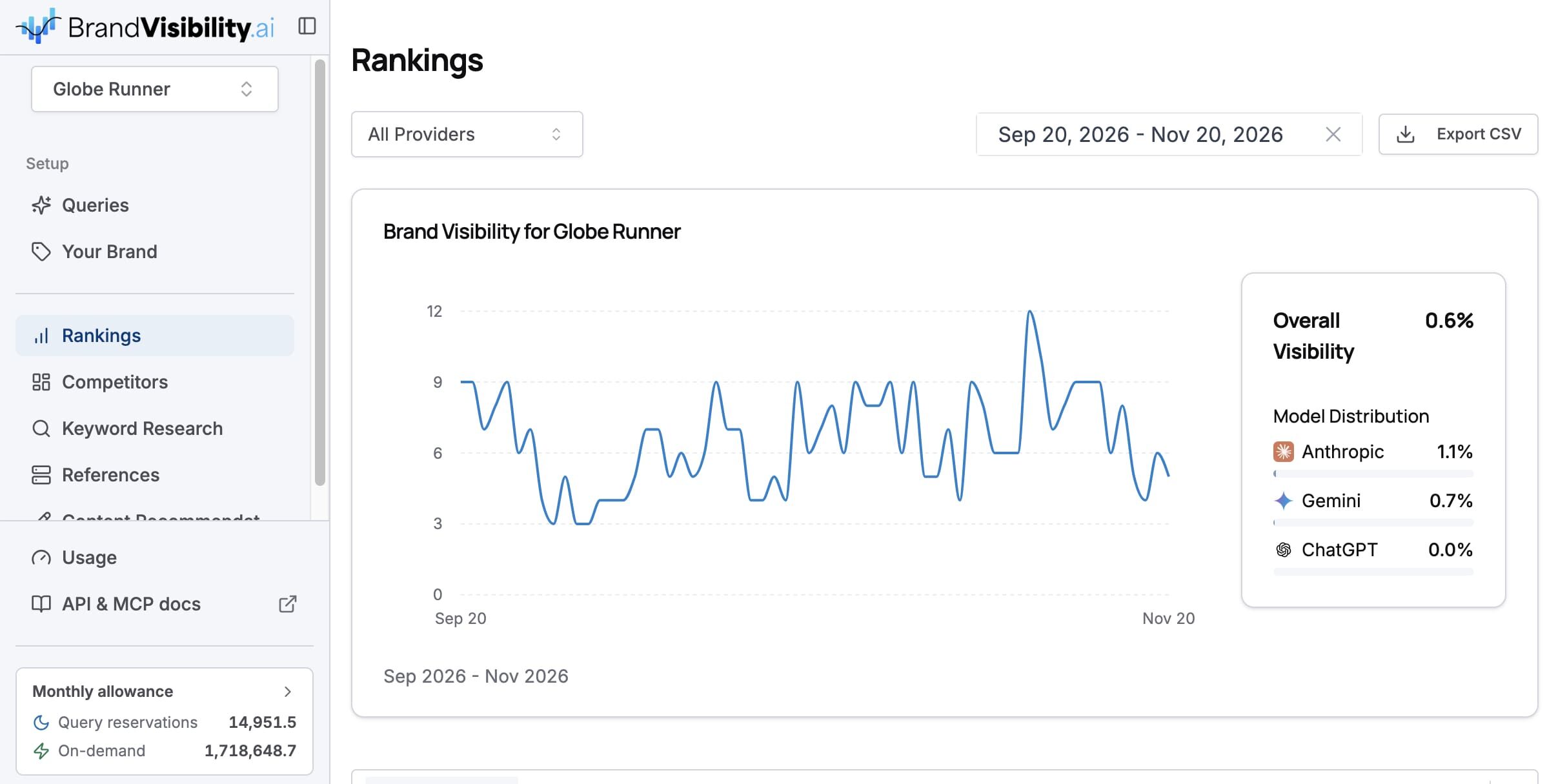
Globe Runner built BrandVisibility.ai to cover what GA4 misses. It tracks your brand across ChatGPT, Gemini, and Claude, and it measures what happens inside the answer, not just the click that may follow.
What AI Is Saying About Your Brand
See whether AI tools mention your brand and how they describe it. If an answer lists the wrong services, an old address, or outdated pricing, you’ll know it needs fixing.
One of our clients recently raised this concern. Their blog has years of posts, and some include data that’s no longer current. They wanted to know whether AI tools could pull from those older posts and repeat those old details to buyers. AI tracking is how you find out.
Whether the Tone Is Positive, Negative, or Neutral
A mention isn’t always good. Sentiment analysis shows how AI frames your brand, so you can spot negative patterns before they spread.
How You Perform on Specific Prompts
Buyers don’t search for your brand name. They ask questions like “What’s the best project management software for a small team?” BrandVisibility.ai tracks the prompts that matter to your business on each platform.
How You Compare to Competitors
When AI doesn’t recommend you, it recommends someone else. Competitor comparisons reveal who appears in your place and how often. Big brands don’t win every answer, either. Smaller brands can still earn a place in AI answers with the right sources and content.
Which Sources AI Cites
AI tools pull from websites, review sites, forums, and Q&A platforms. Seeing which sources shape the answers about you tells you where to focus. That might mean updating your own pages or building a stronger presence in online communities, which is the focus of Community SEO.
How Your Visibility Changes Over Time
AI answers change often. Tracking trends over weeks and months shows whether your AI Optimization work is moving results in the right direction.
What to Do Next
Data is only useful if you can act on it. BrandVisibility.ai offers recommendations based on your results, so you know which gaps to close first.
A brand visibility tracking tool and a traffic report answer different questions. GA4 tells you who arrived. BrandVisibility.ai shows you what buyers heard before they decided whether to visit.
We built the tool for our own client work first. Once we saw how much it revealed, we made it available to other brands.
Which AI Visibility Metrics to Track
Before you run any prompts, decide what you’ll measure. Focus on these four metrics:
- Mention rate. How often your brand appears in answers to the prompts you track. If AI names you in 3 out of 10 answers, your mention rate is 30%.
- Citation rate. How often AI links to or lists your website as a source. A brand can be mentioned without being cited.
- Sentiment. Whether the overall tone toward your brand is positive, negative, or neutral.
- Share of voice. How often you appear compared with competitors for the same prompts. This shows whether you’re gaining or losing ground in your category.
How to Measure AI Visibility for Your Brand
You don’t need a large team to get started. Here’s how to measure AI visibility in five steps:
- List the questions your customers ask. Think about what buyers ask before they contact you. Your sales team and customer emails are good places to look.
- Run those prompts across ChatGPT, Gemini, and Claude. Each tool can answer the same question differently, so check all three.
- Record what you find. Note your mention rate, citation rate, and sentiment, plus whether the details about your brand are correct. If your own pages rarely show up as sources, look at ways to make your site easier for AI to read.
- Compare the results with your GA4 data. Check the AI Assistant channel to see whether visibility in AI answers lines up with visits and conversions.
- Repeat on a set schedule. Monthly checks help you catch changes early.
AI answers aren’t fixed. Run a prompt twice, and you may get two versions. Answers can also vary from one user to the next. A single check can mislead you, so look for patterns across many prompts over several weeks.
Manual checks work well at first. As your prompt list grows, a tool keeps the process consistent and saves hours of copying and pasting.
Turning AI Visibility Data Into Growth
Tracking shows you the problem. The next step is putting that information to work.
At Globe Runner, our team uses BrandVisibility.ai findings to guide our AI Optimization services. We correct inaccurate brand details at the source, strengthen your presence on the websites, review sites, and forums that AI tools cite, and fill content gaps your competitors are winning. Then we track the results, so you can see what changed and why.
GA4 still matters. It shows what AI visibility is worth once buyers reach your site. Used together, the two give you a fuller picture of how AI search affects your business.
Want to know what AI is saying about your brand? Schedule an intro call with Globe Runner, and we’ll walk you through where you stand.
Frequently Asked Questions About AI Brand Tracking
What is AI brand tracking?
AI brand tracking measures how AI tools like ChatGPT, Gemini, and Claude mention and describe your brand. It covers how often you appear, what the answers say, and which sources shape them.
Can Google Analytics track traffic from ChatGPT?
Yes, in part. GA4’s AI Assistant channel groups visits from recognized AI tools, including ChatGPT. It can’t count answers that never led to a click, and visits that arrive without referrer data still show up as Direct traffic.
How often should I check my brand’s AI visibility?
Monthly is a good starting point for most businesses. AI answers change as tools update, so regular checks help you spot shifts before they affect leads.
What’s the difference between an AI mention and an AI citation?
A mention is when an AI tool names your brand in its answer. A citation is when it links to or lists your website as a source. Both matter, and the goal is to earn each one.