How AI Is Changing the Way Marketers Measure Performance
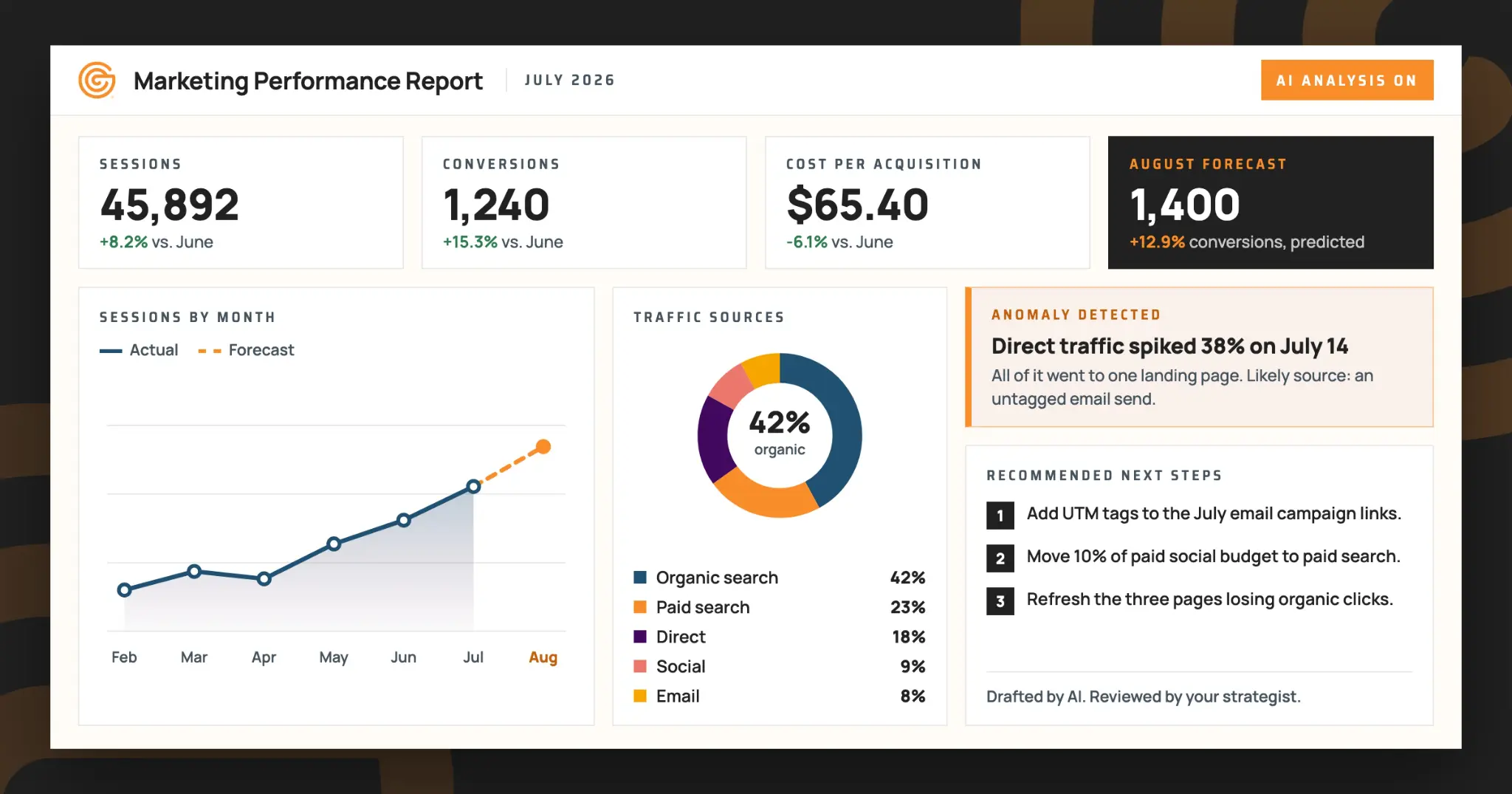
Marketers have more data than ever. Yet many teams feel less sure about what drives results. Privacy rules limit tracking. Buyers switch between devices and channels before they convert. And AI assistants now answer questions without sending a single click to your website.
AI marketing analytics helps close these gaps. It spots trends faster, predicts outcomes, and fills in missing data. AI also creates a new channel that needs its own measurement: AI search.
Here’s how AI is reshaping marketing measurement, where it still needs human judgment, and how to get started.
Why Traditional Marketing Measurement Is Falling Short
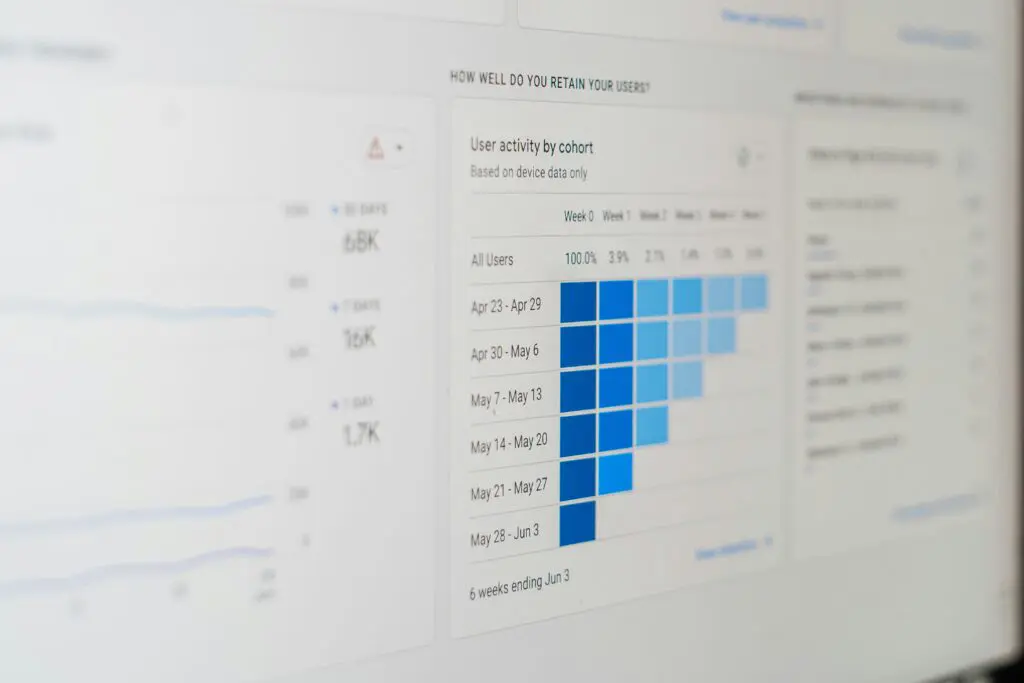
For years, marketers relied on simple models. Last-click attribution gave all the credit to the final touchpoint. Multi-touch models like linear and time decay spread credit across the journey, but they used fixed formulas chosen in advance. Monthly reports showed what happened weeks ago. That approach worked better when tracking was easier and buyers used fewer channels.
Today, those methods leave big gaps:
- Journeys span many touchpoints. A buyer might see a LinkedIn ad, read a blog post, search on Google, and ask ChatGPT for a recommendation before filling out a form. Rule-based models guess how much each step mattered instead of learning it from your data.
- Less data is visible. When users decline cookies or tracking, their conversions can drop out of reports.
- Some influence leaves no trace. AI-generated answers and zero-click searches shape buying decisions without creating a visit to your site.
- Manual reporting is slow. Monthly reports catch problems weeks after they start. Meanwhile, money keeps going to campaigns that aren’t working.
The result is a performance picture that’s incomplete, delayed, or both.
What AI Marketing Analytics Does
AI fills many of these gaps. Here are four ways it improves day-to-day measurement.
Finds Patterns and Anomalies Faster
GA4 uses machine learning (software that learns patterns from data) to automatically flag unusual changes in your data. Instead of digging through reports, teams see alerts when traffic, conversions, or revenue shift in unexpected ways. That means faster answers to the question, “What changed?”
Predicts Outcomes Instead of Only Reporting Them
Traditional reports describe the past. AI-powered marketing analytics looks ahead. GA4 offers three predictive metrics: purchase probability, churn probability, and predicted revenue. Purchase probability, for example, estimates how likely a recently active user is to convert within the next seven days.
Marketers can use these predictions to build audiences and focus spend on users most likely to buy. Keep in mind that these metrics depend on purchase events and minimum data thresholds, so they fit ecommerce brands best.
Fills Gaps Left by Missing Data
When users deny consent, Google tags limit data collection. Google may then use modeling to estimate what was lost. With the advanced setup of Consent Mode, Google receives cookieless signals that support conversion modeling in Google Ads and behavioral modeling in GA4. This gives marketers a fuller view of results while still respecting user privacy.
Assigns Credit More Accurately
Data-driven attribution uses machine learning to split credit across touchpoints based on how your own customers convert. Google made it the default model in both Google Ads and GA4. It also retired the first-click, linear, time decay, and position-based models. For most teams, the choice now comes down to data-driven or last-click.
How AI Improves Marketing ROI
Better measurement matters only if it leads to better decisions. Here’s how AI improves marketing ROI in practice:
- Faster budget decisions. Near real-time signals let teams move spend away from weak campaigns before waste builds up.
- Modern marketing mix modeling. Marketing mix models (MMMs) estimate how each channel contributes to sales, including offline channels. In January 2025, Google made Meridian, its open-source MMM, available to all marketers. Meta offers its own open-source MMM, called Robyn. Meta says Robyn aims to make MMM accessible to advertisers of all sizes.
- Forecasting and scenario planning. Teams can use MMM results to compare budget splits before they commit dollars.
- Incrementality focus. Measure what marketing caused, not just what it touched. This separates campaigns that drive new sales from campaigns that take credit for sales that would have happened anyway.
The common thread is speed. AI shortens the time between a signal and a decision.
The Metric Most Dashboards Miss: AI Search Visibility
AI changes how marketers measure performance. It also changes what they need to measure.
Buyers now ask ChatGPT, Perplexity, Claude, and Google AI Overviews for product recommendations and vendor comparisons. When those tools mention your brand, that influence often doesn’t show up in GA4. No click happens, so GA4 records no session.
For marketing performance measurement, AI visibility now sits alongside rankings and traffic. Useful signals include:
- How often your brand appears in AI-generated answers
- Which sources AI tools cite when they mention you
- How AI describes your brand, including whether the details are accurate
- Your share of voice compared to competitors
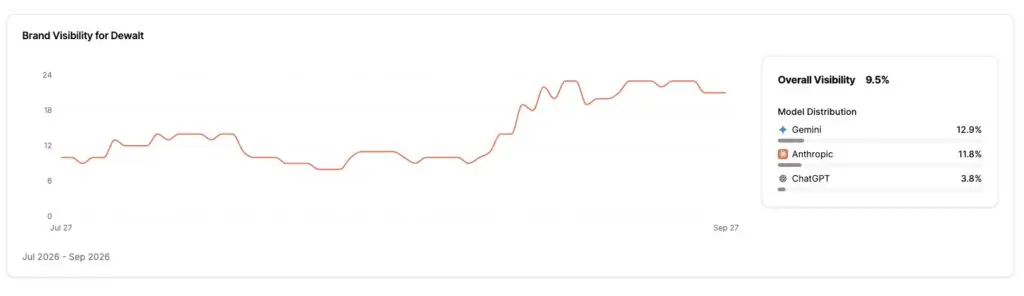
Most analytics tools can’t track these signals. That’s why Globe Runner built BrandVisibility.ai, which monitors how your brand shows up in AI-generated answers. When the data reveals gaps, you can use that information to improve how your brand appears in AI search.
Where AI Measurement Still Needs Human Judgment
AI is powerful, but it isn’t perfect. Keep these limits in mind:
- Modeled data is an estimate. A modeled conversion is not the same as an observed one. Before you make a big budget decision, find out how much of your data is estimated.
- Bad inputs create bad outputs. Broken tags, duplicate events, or missing conversion values lead to results that look reliable but are wrong.
- Some models are hard to explain. AI tools don’t always show how they reached a result. If a report says leads are up, but your sales team isn’t seeing more leads, look into the data before you act on it.
- Strategy is still human work. AI can flag a drop in leads. People must decide what to do about it.
The best results come from pairing AI tools with experienced strategists who know your business.
How to Start Using AI in Your Marketing Measurement

You don’t need a data science team to begin. Use these steps to build AI marketing measurement into your process:
Audit your tracking first.
AI needs clean, reliable analytics to work well. Confirm your conversion events, tags, and consent setup are correct.
Turn on built-in AI features.
GA4 and Google Ads already include predictive metrics, automated insights, and data-driven attribution.
Tie metrics to business outcomes.
Focus on revenue, new sales opportunities, and cost per lead instead of vanity metrics like impressions.
Add AI search visibility to your reports.
Use a tool like BrandVisibility.ai to track how your brand appears in AI answers, and report it alongside rankings and traffic.
Review insights on a set schedule.
Meet monthly with your marketing lead or agency partner to review AI-driven findings and act on them.
Frequently Asked Questions
What is AI marketing analytics?
AI marketing analytics uses machine learning to analyze marketing data. It spots trends, predicts outcomes, estimates missing data, and assigns credit across channels faster than manual analysis.
Does AI replace marketing analysts?
No. AI speeds up analysis and surfaces patterns people might miss. Analysts and strategists still set goals, check results, and decide what to do next.
Can small businesses use AI-powered marketing analytics?
Yes. Many AI features are already built into free tools like GA4. Some features, like GA4’s predictive metrics, need a minimum amount of data before they turn on.
How do I track my brand’s visibility in AI search?
Standard analytics tools only record visits. They can’t show when an AI tool mentions your brand without sending a click. A tool like BrandVisibility.ai monitors how your brand shows up in AI-generated answers, so you can see where you appear and where you’re missing.
How accurate is AI-modeled data?
Modeled data is an estimate based on patterns from trackable users. Its accuracy depends on how much data you have and how well your tracking is set up. That’s why Google requires minimum data levels before some modeling and predictive features turn on.
Measure What Matters With Globe Runner
AI is changing both how marketers measure performance and what they need to measure. Teams that use these tools well make faster, smarter budget decisions. Teams that wait keep making choices based on partial data.
At Globe Runner, we help brands measure what’s working across search, paid media, and AI search, then turn those findings into next steps.
Schedule an intro call to see where your measurement stands today.
Schedule an intro call