














VIDEO: CONVERSION RATE OPTIMIZATION
Conversion Rate Optimization is extremely important. As an agency, we take this very seriously and I would say that sets us apart from most of our competition because we are really looking at driving more leads and more sales.
One of the primary ways we can do that is by increasing the percentage of people that make a purchase decision on any given landing page. The way we do that is through a simple A/B or multivariate testing. This is a simple test that tells us if a call-to-action, image, or headline, works better than the alternative or control set. Once we determine the winner, we implement the change and we start a new test.
This is incredibly powerful because it has the compounding interest of that. If we can make a 5% or 10% improvement on a monthly basis, overtime, that results in a powerful increase in the number of leads in a general area. One thing I would say about conversation rate optimization is that it’s an undervalued technique.
You don’t see a lot of SEOs truly practicing and the problem with most campaigns is not the paid search campaign or the SEO campaigns. It’s commonly the page isn’t converting a high enough percentage of visitors, particularly in competitive spaces that have a high cost-per-click.
The number of visitors that convert into a sales lead is the most critical element that we have control over.
That’s why we spend so much time and energy working on conversion rate optimization. I’d love to talk to you more about it.
Give us a call, but in the meantime, subscribe to our channel.
MICRO-MOMENTS: BREAKING DOWN ‘I-WANT-TO-KNOW’ MOMENTS
Recent research conducted by Google has shown that people are no longer going online for extended sessions of research. Instead, their internet usage is described as ‘micro-moments,’ or quick instances of online activity in which they actively search for specific information.
‘I-Want-To-Know’ Moments Defined
Some of these instances are called ‘I-want-to-know’ moments. In these moments, a person uses a device to search for answers to questions, whether out of a desire to make a better decision or simply for curiosity’s sake. These moments might be broken down as follows.
A Scenario
Suppose you’re relaxing for the evening in front of your TV. A commercial comes on, and it makes some astronomical claims about a product’s capabilities. You don’t really feel like you need the product itself, but if it’s all it claims to be, it might be worth looking into. And after all, you kind of wonder if it actually does everything the commercial says it does.
So you reach for your phone and ask Siri to pull up some reviews. That moment is when your question needs to be answered, and you’ll probably stick with whatever information you find—positive or negative.
Making the Most of the Moment
If the company is smart, they’ve probably published some content about their product that will work within this moment. The response they tailor for the question you have (something like “Is this thing legit?”) needs to have these qualities:
- It must be concise and quickly digestible.
- It must have a genuine tone that is consistent with the company’s other advertising.
- It should be informative. If it provides no value in the first few seconds, it will likely go ignored.
- It should be optimized for search engines so it ranks high on the list.
A wise company will have incorporated content onto their site that will provide the answers you are looking for. Those answers will be quick, succinct, and informative.
Now, if you’re a company looking to make the most of ‘I-want-to-know’ moments, internet marketing services like Accelerate Online Marketing can assist you, so contact us today.
VIDEO: A/B TESTING
I want to talk to you today about A/B Testing and always keeping your website up-to-date. So, when we look at web design, I have a lot of clients that, in the past, have not really messed with their website much for maybe a few years. They have it designed, they spent a lot of money with an agency, and then leave it alone for two, three, or maybe more, maybe 5, 6 years, and they really don’t significantly change it.
So what happens is they get up to date with technology and then it stays stagnant and technology keeps going upwards. Finally, they jump up and are in line with the rest of the world.
Mobile Responsive Design is probably the most recent example of a website update that a lot of people didn’t do immediately and now everyone is finally catching up to it. But what if we thought about it a different way, and let’s take the best in-breed companies, and I’ll have you think about Amazon right now. So amazon.com, can you remember a time when they made a radical update to their website layout and changed it completely? No, because they haven’t done it.
Their website instead has improved in small increments literally on a daily basis. Now, that company and their entire business is based on their website so they do it all the time, but even if we made small incremental changes on a weekly or monthly basis, the website can stay up-to-date and current without having to have a radical design change.
One of the other challenges with radical design change is if you have a successful site and you completely change it, sometimes you throw the baby out with the bad water.
I’ve seen sites that have maybe a somewhat ugly design, but they work. They get it redesigned and suddenly they don’t perform as well. Instead, if you implement an A/B test on a regular basis to determine if a small change will improve or decrease performance, and then only implement winners, you’re constantly enhancing your site rather than taking two steps forwards or one step back.
HOW TO BUILD BRAND VALUE AND CUSTOMER LOYALTY
You represent your brand, but if your brand doesn’t offer anything to the public, you’re not likely to attract customers. It needs value. Fortunately, your brand most likely began with a good idea, and it can provide real value to clients. The trick is communicating that to your audience and being there, armed with credible information, when they need you most.
But how exactly do you do that? Here are a few things to consider when building brand value and customer loyalty.
- State what you do: Before you communicate what you do, you need to know it. Take some time to hash out what you truly offer and how it differs from the rest of the market. For example, if you own an ice cream parlor, you can state that you offer dozens of delicious daily flavors within a family-friendly environment. It shows both value and what sets you apart.
- Create real content: This is more than just mindless fluff or keyword optimized text. This means content that will be genuinely helpful to your audience. It should be meaningful and useful, and as a result—almost incidentally—it will show that you have the skills and experience to provide real solutions to your clientele.
- Be consistent: If your hodge-podge online presence could be safely compared to Frankenstein’s monster, you need to make some changes. Keep your branding and tone consistent across all platforms, both digital and real-world. This includes blogs, social media posts, videos, logos, website aesthetics, etc.
- Stay connected: Social media marketing allows you to connect with your audience in a way that has never before been possible. However, to reach its potential, it must be used correctly. Take the time to put out engaging posts that will get responses—then respond in kind to your audience. Staying actively engaged in relevant conversations can make a real difference and increase customer loyalty in a genuine, organic way–plus, if you are absent from the conversation, you aren’t very likely to hear what clients concerns, issues, and needs are.
Of course, these methods are all far more nuanced than they appear on paper. Online marketing specialists can help you build your brand, create real content, and stay connected. For the assistance you need, contact us today at Accelerate Online Marketing.
.BEST VS .COM SPONSORED STUDY: WHICH DOMAIN IS KING?
With over 100 million .COM names registered (and counting) some businesses are finding it exceedingly difficult and more expensive to find competitive edge in SEO and SEM.
With most meaningful .COMs taken, businesses are spending more to drive traffic to their domains.
Our team wanted to research how keyword-rich new gTLD domain names affected the SEM value of an online property. In other words, would naming a domain with a new gTLD (in this case, .BEST) rather than the traditional .COM have a positive statistical impact on a website?
Based on our testing and research of a series of domains on Google throughout May 2016 (testing which included hundreds of keywords and thousands of impressions), Globe Runner arrived at the conclusion that the .BEST domain conferred a tangible benefit over the .COM domain in online advertising efforts.
As pictured below, utilizing a .BEST domain boosted results both in cost and clicks.
Our research shows that you can save money and reduce your cost per lead by using one of the new gTLD domain names.
Particularly in the moving industry, the .BEST domain name allowed us to save dollars-per-click within Google AdWords. In the long-term, after thousands of clicks, this price difference would make for significant savings.
If you’d like to know more about the sponsored study, download our report and compare the results between .Best and .Com domains.
HOW TO GO ABOUT DOING KEYWORD RESEARCH
by Alicia Kan
Everyone always asks a digital agency about their keyword research process. The truth is that there are as many techniques as there are ways to take your coffee: Literally hundreds, and no way is right or wrong.
At Globe Runner, we’ve got a keyword research framework that everyone has customized with their favorite tools and resources. Use it to build your own process for your own purposes, and keep it flexible enough to accommodate any new keyword research developments that come along.
Why conduct keyword research at all?
Because skillfully incorporating search terms your target audience is using to find your products or services increases the likelihood of their finding you. Whether you’re launching a new website, aiming to grow your blog readership or wanting to increase your social media followers, doing keyword research helps to make your activity more focused and strategic.
Step 1: Do baseline and gap analyses
If you are working on improving your website, what does the current situation look like and where would you want it to be? Start with how many keywords the site is actually ranking for. Create a spreadsheet to keep track of all the terms, and to give you a firm idea of how close/far you are to your goal.
Each section of the site should have a tab in your spreadsheet. For example, if you have a fashion e-commerce site, have a tab for each category of clothing, e.g. tops, bottoms and shoes. Each tab will have multiple types/variations of keywords. Tops might have t-shirts, tank tops, blouses and so on.
Keeping a spreadsheet not only organizes your activity but allows you to break down the job in manageable chunks. It also gives you a sense of progress as you complete each section.
Step 2: See how you stack up against the competition
After you’ve assessed where you are and where you want to be, it’s time to look at the competition. What keywords are they ranking for?
Use SEM Rush to plug in your site as well as those of a few worthy competitors. With SEM Rush you get a better idea of what your site and those of your competitors are ranking for and how they’ve been affected by Google’s algorithm updates over the years.
Under the ‘Organic Research’ tab, find the ‘Positions’ menu (see red arrow in our example using Inbound.org). You’ll see a list of keywords as well as a graphic showing historical data. Export the organic positions data (where the other red arrow points to). This way you get the ‘money terms’ only.
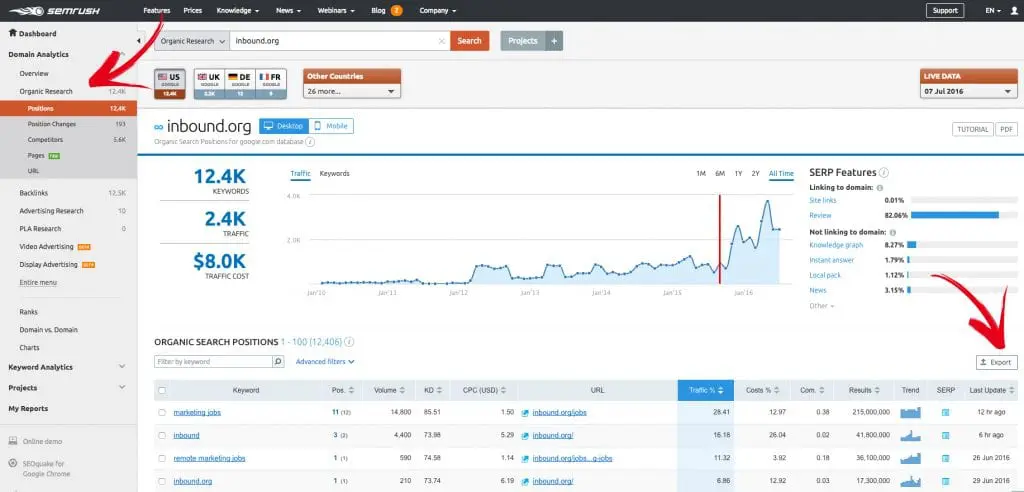
Once you’ve exported the list, delete all columns except for these:
- Keyword
- Position
- Search Volume
- URL
- Competition
- Number of Results
Sort by Search Volume – Largest to Smallest.
Step 3: Get creative — find suggestions
Use the keywords you gathered and plug them into Google for it to auto-suggest related terms. You’ll see several recommendations that users might be more apt to choose over their original search term. We’re using one of the terms that Inbound.org is ranking for on page 1, and that’s ‘hubspot certification’.

Pull terms you don’t have in your spreadsheet and add them to the relevant tab. You’ll also see a similar list of suggestions at the bottom of the search page.
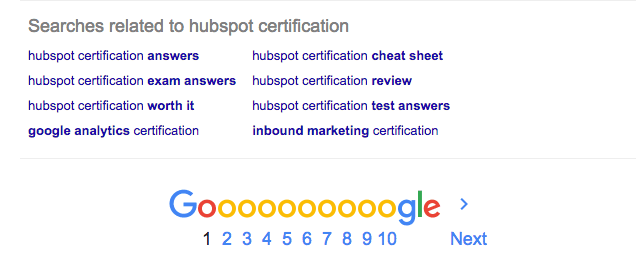
Rather interesting how ‘exam answers’ and ‘cheat sheet’ are popular related searches 🙂
Google’s auto-suggest feature is just one tool to use in digging up other related keywords but there are more choices out there, such as:
Google Keyword Planner. Obviously where everyone starts. ‘It allows you to easily organize keywords and download them in a format that can be imported into Adwords Editor.’ – Katy
Keywordtool.io. ‘It lets you see what kind of questions people are asking.’ – Jenna
Hashtagify. ‘Great for finding popular terms on social.’ – Lauren
Keyword Shitter (yes, it exists). ‘Easy to use; no fluff.’ – Zain
As for myself, I like using different tools depending on the situation. Moz’s relaunched Keyword Explorer has at least two billion keywords to nerd out to — this Reddit thread is a great conversation between Russ, the developer who worked on it, and members of the SEO subreddit. Google Trends is particularly useful for determining seasonal content — enter a search term and it’ll show search trends over time and related terms at the bottom of the page. Spyfu is worth its weight in gold when it comes to PPC and beyond. I’ve used competitors’ best performing ads to extract keywords for web copy for instance.
Don’t forget too that sometimes you can find gems closer to home. If you’ve got Google Search Console all set up, head over to the ‘Search Traffic’ tab and down to ‘Search Analytics’. You can filter Queries by ‘how’, ‘why’ and other qualifiers in order to see what questions people are typing into the browser.
Step 4: Test your terms
By now, you should have a dizzying abundance of keywords. It’s time to narrow them down to the best ones.
Enter the keywords you’ve gathered into Google’s Keyword Planner — click the ‘Keyword Ideas’ tab below the bar graph to find exact search volumes for the terms you entered. Below it you will see several keywords similar to what you entered that would be good candidates as well. Look for keyword opportunities with high search volumes and low to medium competition that may not have been targeted previously.
Once you’ve narrowed down the list, enter them into the Moz Keyword Difficulty Tool to determine how competitive the terms are. The difficulty will be expressed as a percentage; the higher the percentage, the more competitive the term will be.
Have thoughts on Grep Words, Top Visor and other new(er) keyword research tools? Know of any other resources? Add them to the comments below.
Photo of antique keys by Sergio K via Flickr
5 TRAITS TO LOOK FOR IN A REPUTABLE DIGITAL MARKETING AGENCY
Naturally, with the essential nature of online marketing, thousands of digital marketing agencies are out there offering their services to companies around the globe. As with any business, their levels of competence and reliability vary, so you need to search carefully to find an agency that will work. To help you tell a reliable agency from less reliable ones, here are five things you should look for:
- Transparency: If PPC, SEO, responsive design, and other web marketing terms are gibberish to your ears, they certainly shouldn’t remain that way. A reputable digital marketing agency will not only make sure each aspect of your online marketing strategy is well executed, but they’ll also make sure you understand exactly how it works.
- Continuing partnership: The right agency won’t set everything up just to leave you to your own devices afterward. They will act as reliable consultants to make sure your new traffic converts into clientele.
- Holistic approach: Your audience is everywhere, and you’ll need multiple strategies to reach potential customers. A reputable agency understands this and will employ a wide variety of digital marketing methods to attract traffic.
- Awesome track record: Naturally, a reputable online marketing firm will have a strong history of pleased clients. Take a look through their reviews and see how they’ve helped other companies build a strong online presence and boost revenue.
- Rockstar-grade skill: To be successful in online marketing, skill and expertise are vital. The right agency for your company will employ digital rockstars with the skills, education, and experience needed to implement their strategies effectively.
Transparency, continuity, experience, and customer satisfaction are all important factors to consider when choosing a digital marketing agency to handle your online strategies. Accelerate Online Marketing strives to fulfill all of these qualities, but don’t take our word for it—check out our portfolio, browse our client reviews, and contact us to see how our team of digital rockstars can help you.
6 SEO TIPS TO HELP YOUR SMALL BUSINESS SIZZLE THIS SUMMER
The year is half way over, but there’s still time to heat things up in 2018. Whether you’re bent on driving more traffic to your site or simply need more sales in the pipeline, search engine marketing has never been hotter.
We’ve pooled six of summer’s best SEO practices to help you sizzle this season. Look out, these SEO optimization tips are coming in hot!
1. Make sure yourmenu of services is up to date
In essence, this is your secret sauce to help out-market your competitors, get clear about your brand’s keywords, and define your categories in Google. Adding a FAQ, testimonial, and case study section to your service page will really sell it, too!
2. Utilize Google Trends and Insights to plan compelling content
‘Editorial data-based stories’ is a new feature of Google Trends that’s helping content creators make their blog topics, keywords, and social media strategies more specific – and effective! With access to data trends culled from trillions of online searches, digital marketers can gear content based on what users all over the world are querying both in real-time and overtime – for free.
3. Take advantage of new tools like In-Marketing Audiences
Want to improve your search campaign performance on Google and Bing? In-marketing Audiences allows you to target users with search histories that align with your product or service. It’s free, has the potential to lower your CPA, and helpful for gearing your search campaigns and online ads toward audiences at the end of the buying cycle.
4. Have your web dev team code for priority hits
Wish you could control what loads first on your site? Chrome Beta is about to help your most important features take center stage. In our quarterly review of the most promising digital marketing trends of 2018, we learned that developers will soon have the power key in code that distinguishes certain digital assets on your site as high-priority. This means that critical header or prized picture can start captivating your target audiences sooner than other content.
5. Set up local service ads (LSAs)
Whether you build houses or clean them, you’re likely operating in a defined SBA (service business area). Makes sense to put your online advertising dollars there, right? Google local service ads is a pay-per-lead ad platform that can help small businesses keep their review ratings high and increase their brand awareness in their local market.
6. Drill down and really look at your data
Google analytics used to be the end-all-be-all for making discoveries through data. However, Google Tag Manager, GA’s more sophisticated older sister, can track any activity you program it to. It collects information from a variety of verticals, giving marketers the freedom to isolate activity on any number of key metrics. Essentially, the more you understand what users are doing on your site, the better chance you have of making them customers.
Hot on the trail of more SEO best practices for the rest of 2018? Give us a shout! We promise we won’t just blow hot air at you.
4 REASONS ENGAGEMENT RING RETAILERS WIN AT SOCIAL MEDIA
Globe Runner has had its fair share of fine jewelry clients, specifically those in the engagement ring business. And boy, marketing diamond sparklers on social media is tough.
Apart from the competition, there are also the twin challenges of growing your audience on social and driving traffic to the website. We’ve learned by trial and error what works and what doesn’t, and listed below the five most useful lessons we’ve learned from our fine jeweler clients who excel at social media:
1. They make their pictures work harder
Our clients put immense effort into the photography and retouching of ring photos — for good reason. In their world, it’s the eye candy that grabs attention, not clever copy.
But you already knew that. Here’s what you may not know:
Good marketers optimize their photos as they help with visual search. Make sure your photos have keywords; ensure better page load speeds by reducing their sizes. Think of places where your photos could end up and you’ll see that watermarking them (discreetly) or adding a logo or web link (discreetly) adds an extra boost to your social media efforts.

Many Pinterest boards have photos that lead to 404s because the page with the photo was unthinkingly deleted. A web URL on the image would help enormously in leading interested shoppers back to your site.
Vary the solo photo routine every now and then by throwing in themed slide shows. They’re fantastic ways to repurpose existing content and are proven to be a draw. And don’t be afraid to be quirky. This slideshow on Disney-inspired engagement rings was the best performing content about engagement rings in 2015, earning 547,000 shares on Facebook for tech site Chip Chick. Which brings us to the next point …
2. They know Facebook is their best friend
BuzzSumo research on engagement ring content from the last 12 months bears this out. If fine jewelry clients had time and/or resources for only one or two social media platforms, for sure Facebook is there. The proof is in these BuzzSumo charts:
Facebook has more than quadruple the number of shares on Pinterest, the second most used social media channel.
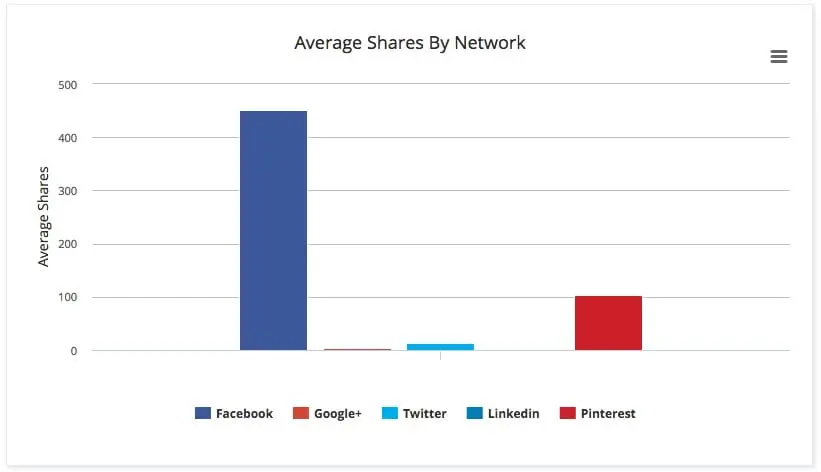
Facebook dwarfs the other platforms when it comes to sharing pretty much any content format for engagement rings.

Why is Facebook such a win in engagement ring marketing? Two reasons:
- Getting engaged counts among one of life’s most significant milestones, and Facebook is The Platform for announcing to one and all life’s updates, whether big or small. If as far back as six years ago women were already discussing how to compose a creative engagement status update on Facebook, it’s only logical for fine jewelry marketers to focus the most attention on this social media network.
- Two-for-one: Although women are the main audience for engagement ring retailers, their fiancés are the buyers. The ability to tag one’s significant other when going into raptures over rings gives marketers more visibility for their product.
Posting times can be critical to Facebook posts’ performance. From our experience, evenings are the best time to schedule a post as brides are busiest scouring social media for inspiration and ideas.
3. They promote engagement (pun intended) by asking questions
Flash a question mark in front of people and they’re prompted to respond — it’s wired into the human brain. Some examples of how engagement ring retailers have applied that philosophy with sterling results to social media posts:
- A collage of recently engaged celebrity engagement rings, accompanied by the question ‘Whose engagement ring style do you like best?’
- A photo of a gorgeous ring with a coy ‘Say yes?’
- A group shot of different diamond cuts, appropriately labeled, with a caption that says ‘Marquise, cushion or halo? Which cut is your dream ring?’
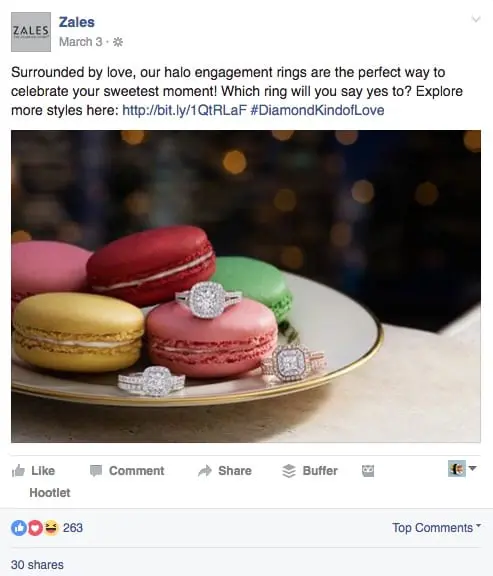
Make sure the questions are of the easy yes/no variety and watch the answers roll in.
4. They don’t think of social media as an end unto itself
The best marketers of engagement rings see social media as part of an intricate ecosystem with many moving parts, and the latter has to be organized for the former to perform at its best. Before posting that perfect picture and caption on social media, you can be sure that these have taken place:
- The landing page linked to from the post has been optimized for desired actions, e.g. extending a visitor’s stay on the site by providing links to other related products; providing a pop-up with a promotional code in exchange for an email address
- The link was generated through Google’s URL builder to measure visitor traffic driven by that post
- Thought has been given to going beyond organic shares — using promoted or boosted posts, for example, or social media influencer outreach
In short, social media both complements and is enriched by other marketing channels. Getting all the cogs working together for a common objective is key.
Underwater photo of engagement ring by Emily Cline via Flickr. Alicia is director of brand strategy at Globe Runner and a recovered diamond enthusiast.
- « Previous Page
- 1
- …
- 23
- 24
- 25
- 26
- 27
- …
- 45
- Next Page »