












SOCIAL VIDEO TIPS
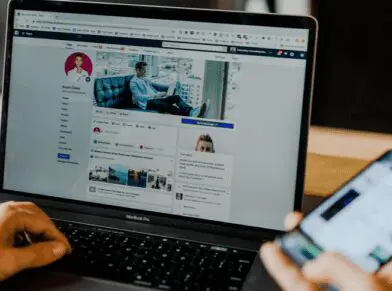
If you’re going to all the trouble to produce a video and put it up on YouTube or Facebook, you want to get the most out of it. I’ve got three simple tips for you to make sure you maximize your efforts. The first one is creating a custom thumbnail.
If you look back at my old videos, you’ll see that I didn’t always do this, and, sometimes, to an embarrassing degree. I captured my very first slide as me with my mouth open, which doesn’t look very attractive.
Making a custom thumbnail is more important than just avoiding an unattractive look on your face. The other thing it does is it sells the click. It sells the user on clicking on your video, so they watch the content that you produced. That image is probably the most important thing that they’ll see.
The next one, not to undermine the value of words, is the title of your video. What that title is describes the video and, once again, sells the user on clicking on it.
Just as importantly, it also tells YouTube what the content of the video is and lets YouTube serve it up for the proper search term. Titling your video properly is incredibly important.
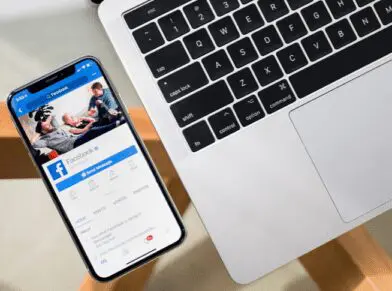
The last tip is native posting. A lot of people will post a video on YouTube and then copy that video and post it again on Facebook. It’s a huge mistake and it loses a lot of traffic.
Facebook actually gives a very strong preference, a 10x preference in fact, to video content that’s posted directly on Facebook. Rather than posting on YouTube and reposting it on Facebook, post it again natively on Facebook. You’ll get as much as 10x the traffic for your organic Facebook video.
With that said, if you’d like some help with your video strategy, feel free to reach out to us. We look forward to hearing from you.
One last thing, if you have any questions that you would like answered, feel free to put them in the comments. I’d love to answer them in a future video. Thanks.
WHICH SOCIAL MEDIUM IS RIGHT FOR YOU?
This is one of my favorite questions. It’s about social media platforms and which one is the right choice for your business?
I think a few years ago, everybody thought, “Gosh, I need to be on all the social platforms.” I even remember creating profiles on hundreds of platforms just so I could be on everything. I thought that would nail it. I would have a huge audience if I were just on everything.
What I, and every other business owner, quickly realized is that being on everything does not mean you’re effective on everything. What we look for now ‑‑ and what we should have looked for then ‑‑ is how to be effective on the platforms that you choose that are right for you.
When you think about your brand, think about where your consumers are. Where are your brand advocates? Where are the folks that want to engage with you? Are they on Twitter? Maybe. Maybe not. Are they on LinkedIn? Maybe. Maybe not.
Here are some examples. In the wedding space, Pinterest is an area you need to be in. For interior design, Houzz is must‑do social media. Instagram is huge for creatives.
Where you are highly depends on what you do and what you’re trying to sell and to whom you’re selling it to. Carefully think that out, get onto that social platform, and then engage effectively on that platform. This is much better, and more effective, than scatter‑shooting across the web.
If you’d like help selecting the right social platform for your brand and setting up an engaging presence, reach out to us. We’d love to be a part of that strategy and help you engage on social.
GROCERY SHOPPING AT AN AMAZON STORE
If you’re anything like me, you love new stuff, and Amazon has really done it this time. I’m really excited about this. You may have heard about it. It’s called the “Amazon Go” store that just opened in Seattle. It will be open to the public sometime in 2017.
What does this mean? It’s kind of the blending of online and offline retail. At that store, I can walk in, grab the goods that I want, and walk right out. No checkout. No lines. Just walk out with the goods I want, and my account will be charged. All I have to have is the Amazon Go app that corresponds with it.

When you think about this, how does it impact your business? Amazon’s been well known for reducing friction in the transaction process. They’re the first ones to innovate and create the one‑click checkout, which is still an industry leading e‑commerce feature.
When we think about reducing friction, I think it really is the key to accelerating commerce. If you want to accelerate commerce in your business, start thinking about how you can reduce the friction that it takes to do business with you.
With that said, feel free to reach out to us. We’d love to look at how you can reduce friction in your business, and we’d love to do business with you.
Also, please leave in the comments any questions you might have. I’ve been doing this for a little while, and I love to answer questions about digital marketing. If you’ve got something that you’d like me to answer in a future video, leave it in the comments. I’ll look forward to reading it.
ADVERTISING ON VENMO?
What if you could advertise on a platform that didn’t allow advertising at all? Well, that’s exactly what WATER IS LIFE did.
WATER IS LIFE is a nonprofit. It’s actually the one that my kids selected this year as part of our family Christmas. We’re going to be giving some money to their organization.
When I looked into the organization, I found this strategy and I loved it so much I wanted to do a video on it. What they did is they actually raised money through Venmo. Venmo is a micro money exchange app. It allows you to pay back a friend for pizza or something like that very easily through your phone. But, they don’t allow advertising at all.
What WATER IS LIFE did is instead of advertising on the platform, they sent people money. They literary sent them money. Now, keep in mind, they sent them one penny, but in that one penny exchange they were able to write a description of why they sent them a penny.
They sent them a penny and they said, “Here’s a penny for you,” and asked for some money back. They asked ,”Will you send some money to support clean water around the world?” Really clever marketing strategy.
I bring it up not because I want everybody to go out and send pennies and solicit funds.
I bring it up to say marketing is something that is never dead. It’s never still. It can always be innovated on. And, lastly, push yourself. Push yourself to think beyond where you’ve been before and where you can go in the future.
Thanks so much for reading. If you’d like help coming up with a unique marketing strategy for your business, give us a call. We’d love to talk to you.
ARTIFICIAL INTELLIGENCE AND CONSUMER BEHAVIOR
Let’s get to one of my favorite subjects; artificial intelligence. I love this because I’m such a super tech nerd that I think AI is the coolest thing to talk about. It’s here. It’s real. We really have AI now.
Now, I don’t know if it thinks and feels like we do, but I’ll tell you what it will do. It will start acting as a lot of customer service behaviors will be taken over by AI.
Nowadays, you can get assistants that will manage your emails for you. I’ve got an AI on my computer that helps me write more compelling messages that I just installed a few days ago. It’s reading my text as I’m writing it and making recommendations on how I can get a response.
Wildly cool stuff, but here’s one thing that you can expect. A lot of consumer behaviors will start to be influenced by AI and what I’m here to ask you, or push you on a little bit, is are you thinking about that for your business? Because if you’re not, you will soon be behind the times.
AI is admittedly the future, but it’s a future that’s coming this year, in 2017. It’s not a future that’s long, long away, years and years from now. It’s literary rolling out this year.
I think we’ll start to see major retailers start to pick up AI in their customer service departments and start to respond to people in ways that the consumers are actually happy with and they get an accurate and quick response.
AI, remember, can gather huge amounts of information and answer consumer queries much quicker. So, be thinking about that when you’re thinking about how your business strategy is going to grow and are you going to react to AI and are you going to be able to integrate that effectively and be a market leader in your space?
Thanks so much for reading. If you’d like to brainstorm about AI a little bit, give me a call. I have fun talking about it, just because I think it’s a great subject.
LISTEN UP! VOICE-ACTIVATED MARKETING IS HERE
The day after this year’s Super Bowl, headlines were not just dominated by the New England Patriots’ stunning comeback from a 21-3 halftime deficit; What was stunning was the effect of Google’s one-minute TV ad for its Google Home appliance. It was a promotion that just kept on going right into news media headlines and all over social media for about 36 additional hours.
The ad portrayed people using the device by employing the vocal command: “OK, Google,” to turn on lights, find a replacement for cardamom, find and listen to the sound a whale makes, and how to greet people in Spanish. The voice command in the ad also activated Google Home appliances located in the same room as televisions tuned into the game.
This event illustrated just how pervasive these voice-activated artificial intelligence (AI) appliances are becoming. NextMarket Insights, a tech research firm, is predicting that some 30 million households will have a voice-activated AI appliance by August this year.
Do not ignore the power of voice. The very way in which consumer searches are performed for basic information, especially products and services, is on track for a radical disruption that will sort winners and losers via a fundamentally altered set of rules. This is not an understatement. Voice-activated AI appliances are arriving in living rooms faster and with new demanding challenges that very few prescient industry leaders, let alone organizations large and small, are truly prepared to meet.
Voice Technology Is Now
I’m the CEO of an online marketing firm. But guess what? I’m also dyslexic. So here is my expertise and disclaimer of sorts: I am a long-time user and advocate of dictation technology. I consider myself an early adapter of voice search technology. When I first started using speech recognition technology about two and a half decades ago, it was impossible to describe the experience as anything close to “artificial intelligence.” Today it’s totally different.
Speech recognition has come a long way since the 1952 birth of Audrey, Bell Lab’s complex vacuum tube machine, which recognized spoken digits. By the 80s programs such as Tangora and Dragon Dictate could recognize tens of thousands of words. What held them back from meaningfully entering the consumer market was that they processed “discrete speech,” which _ is _ spoken _ one _ word _ at _ a _ time. I can tell you it was both maddeningly pedestrian and very expensive at $9,000 per set-up.
Then, in 1997 everything changed… Dragon Naturally Speaking hit the market as a Windows software add-on that recognized continuous speech and the price dropped. Two decades later voice-activated AI assistants, working as an app on a smartphone, tablet, or desktop (Apple’s Siri, Google Now, Microsoft’s Cortana and BaiDu’s DuEr) are ubiquitous.
As reported by Apple Insider, Paul Ricci, the CEO at Nuance, which owns Dragon, said, “The real problem is creating a virtual assistant that can understand what the user wants and take action based on anticipating those needs.”
We are very close if not already there. Voice-activated AI appliances keep up with people’s voice search and command speed, their accents, and even pick out their voice in the midst of a crowded or music-filled room. The new battle to enter our daily lives and shape how and what we access is between these AI devices, the abilities they possess and ultimately the experiences they deliver.
Who’s Creating The Rules
VoiceLabs.co, a pioneering voice analytics firm, “predicts between Apple, Samsung and Microsoft, two of the three will ship compelling voice-first devices in 2017.” BaiDu purchased Raven, a voice activated intelligent appliance start-up, this past February. Even Facebook is reportedly trying to find the right foothold in the market.
In the meantime, Google Assistant via Google Home devices and Amazon’s Alexa on Echo devices are both available at varying costs under $200. That leaves Google and Amazon to make the rules, for now, on just what voice-activated intelligent appliances do, and tailoring them to what these two businesses do best, which is not the same thing.
Amazon is primarily an online retailer, while Google is principally an information organizing and delivery service. It should be no surprise that Amazon’s Echo is expected to focus on delivering commerce-oriented experiences, while Google Home will multi-task into improving information organization and delivery, as well as productivity and communication experiences.
The voice-activated AI appliance that will dominate the home market is the one that will deliver the most dynamic and comprehensive user experiences. Third-party application developers including household brands are joining the voice-activated ecosystem to achieve their voice-activated marketing goals.
SEO Challenges In Different Voice-Activated Ecosystems
In order to evolve and meet customers’ voice-demands, it is crucial that we all become more cognizant on how a voice search diverges from a typed search and how the different AI appliances will treat that search.
At this time, the Google Home’s voice-activated Google Assistant can access Google’s vast technical experience and powerful algorithmic resources to deliver answers for simple to complicated voice requests for information, in addition to tasks such as scheduling and recording shopping lists. This is because Google has invested heavily in developing and improving its Hummingbird algorithm, within which are two very potent humanizing algorithms: Knowledge Graph and RankBrain.
While Hummingbird is the umbrella search algorithm, it carries within it many other algorithms such as PageRank (uplifts pages with solid content and links) and Top Heavy (lowers the visibility of ad-heavy pages). Knowledge Graph’s AI intuits what a user is looking for by recognizing and acting upon the relationships between words and therefore context. RankBrian’s AI interprets sentence-length queries akin to the way human beings speak.
Amazon Echo’s voice-activated Alexa operates under a completely different collage of rules that combine the Amazon store’s offerings with select search engines and “skills,” like smartphone apps, that you choose to load on to it. For instance, if a user wants Alexa to access and report the weather, it will rely either on Accuweather.com, or a weather skill that the user has loaded. While the default search engine is Bing, localized searches and recommendations are sourced from Yelp.
In the same manner, Apple iPhone and Samsung Galaxy has focused on developers and apps, so too has Amazon. While the website for the Amazon subsidiary Lab 126, which developed the Alexa AI assistant, is a spare cupboard, at Amazon.com there is ample support for skills developers and also for electronics makers to design Alexa-enabled products.
What This Means For Marketing
Battle lines have been drawn, but so far dominance has not been achieved, especially as not all of the contenders have taken the field. Reviews of Google Home and Amazon Echo are mixed, and depend heavily on what user experience the reviewer was looking to have. You can place a safe bet that Apple, Samsung and BaiDu are paying attention and incorporating solutions to their competitors’ early missteps into their product development.
So without a clear leader, how can a business position itself to survive this disruption? The answer is multifaceted and also depends heavily on the business’ current market position.
Large brands and medium sized companies currently with a national or regional market will need to diversify their marketing approaches. To play by Google’s rules they will at once need to optimize their websites for voice searches that most closely match a voice-activate search.
Large and medium-sized companies will find joining Amazon Echo’s ecosystem hinges on developing an Alexa skill. Campbell’s Soups has already developed Campbell’s Kitchen for Alexa, which will bring up voice-activated audio recipes depending on the meal and the user’s taste and time requirements.
For the Google Home ecosystem, medium and small businesses that depend on geographically local customers will need to ensure their websites are optimized for voice searches, just like the big brands, with an emphasis on their location. For businesses that cannot afford to develop an Alexa enabled skill, or if it just does not fit the business model, ensuring that the website is voice-search optimized for Bing and Google will be a must, but so too will being listed in online guides such as Yelp, HomeAdvisor, or Open Table.
Lastly, all business must be ready to adapt these marketing approaches to what Apple, Samsung, or BaiDu will likely create for the artificial intelligence appliance. And remember: Dominance over what will be the right marketing method for these voice-activated devices has yet to be decided.
If you are looking to get your business ready for the voice activated revolution and want to enter the Google Home and Amazon Echo ecosystems, contact us. We will design a multi-pronged approach that is right for your unique business and ensure that you meet your marketing goals.
Photo Courtesy Flickr/Howard Lake
AMP – ACCELERATED MOBILE PAGES
AMP. Accelerated mobile pages. Now, this is super cool because it’s super fast. On the phone, I get so bogged down waiting for web pages to load and this is the solution to that problem. So, Google actually came out with this recently. It’s an open source structure and it’s a way of producing code that loads incredibly fast. And what AMP actually does, is it takes the code of your website, minimizes it, and then sends it through Google servers. It loads in less than a second.
So while a normal web page might load in 3-10 seconds, AMP loads instantly. And here’s the great part. We can bring AMP onto any website. So, what we’re doing with our clients is we’re moving all of our new builds, and we’re building them using AMP. Some of our legacy clients, we’re slowly adding AMP on to, as well. AMP is an incredible, powerful tool. And here’s the great thing. Not only do your users get onto your website faster, a couple of things happen. One, there’s a giant leap in conversions if we can reduce your page load speed, particularly on mobile. As soon as you cross 3 seconds, your conversion rate will drop through the floor. So if you can get that load speed under 3 seconds, which AMP, at 1 second, is well under, you will get a much better conversion rate.
The other thing is, Google will actually give you search ranking preference so you’ll rank better in mobile search if you’re AMP enabled. Google knows that the user wants a fast page, and they’re going to serve it up faster. Lastly, Google will mark it as an official AMP page on mobile search. You may have even seen it, it looks like a little lightning bolt. Keep your eye out for it, particularly on news and information-related searches. AMP is very common these days on some of the bigger news sites. So, if you haven’t heard of AMP, give me a call and let’s talk about it, I’d love to get it implemented for you. It’ll really speed up your site and speed up your performance.
WHY YOU SHOULD KNOW YOUR CPL LIKE THE BACK OF YOUR HAND
Have you ever run a marketing campaign, spent a little money, got a couple leads, and at the end of your day wondered if it was a good use of your funds? Well, you’re not alone. On a daily basis, I talk to business owners who face the same complication. One of the first and most important metrics to track and determine is a target cost per lead (CPL). If you’re like most business owners, you want lots of leads for very little money. But to truly set up and build a successful campaign, you must first determine the most you are willing to spend on a lead. We all want lots of leads for free, but marketing costs money. The question is, how can you spend your money profitably?
Understanding CPL
CPL is what it costs you to get one lead. So if you spend $10,000 on a marketing campaign and you get 100 leads, your CPL is $100. Whether or not that’s a good deal is completely dependent on your business. Let’s go over how you can determine what a good deal looks like.
We have clients whose target CPL ranges from thousands of dollars to under $20. The easiest way to determine your CPL is to take your average deal size and look at annual customer value. Annual customer value is more helpful for an individual purchase. For instance, if you sell a customer a bag of consumable widgets for $250 on average once a month, then your average customer is worth $3,000 revenue annually. Likewise, if a service provider has a typical engagement size of $12,000, and a customer only buys once a year, then the annual customer revenue is $12,000.
In this example, let’s take a business that has determined their annual customer revenue is $12,000. Determine your gross profit on a deal. For simplicity sake, we’ll go with a 50% gross profit, leaving us with $6,000 in gross profit.
Interested in reading the rest of this article?
You can find the full-length version on Forbes.
GLOBE RUNNER WELCOMES MATT CUTTS AS DIRECTOR OF SEARCH
Note: This was Globe Runner’s 2015 April Fool’s prank.
Contrary to popular belief, Matt Cutts never actually left Google.
You can read more about this on our follow-up post, here.
Matt Cutts and Bill Hartzer from Globe Runner
Globe Runner is pleased to welcome our latest employee, Matt Cutts, as Director of Search. Mr. Cutts, a well-known authority in Search and former head of Google’s Web Spam team, will join Globe Runner effective April 1, 2015.
Cutts brings 15 years of experience in search and is a well-known, respected thought leader in search strategy, search quality, and web spam. Mr. Cutts has been very vocal about search during his tenure at Google. As the lead liaison to webmasters and website owners, he has appeared at numerous search industry conferences, including SMX West, and Pubcon. Mr. Cutts has also appeared in numerous Google Webmaster videos.
Before joining Google, Matt Cutts worked on his Ph.D. in computer graphics at the University of North Carolina at Chapel Hill. He has an M.S. from UNC-Chapel Hill, and B.S. degrees in both mathematics and computer science from the University of Kentucky.
Matt Cutts joins Globe Runner in its holistic approach to digital marketing clients across various marketing channels such as search engine optimization, paid search, social media and email marketing. “I’m honored to have joined a very skilled and experienced international team that delivers valuable digital marketing services to its clients. It’s very refreshing to see an agency where the clients are the number one focus,” said Cutts.
Eric McGehearty, CEO of Globe Runner, states, “Matt’s extensive experience not only includes fighting web spam at Google, he understands the various search engine algorithm ranking factors. While we don’t expect Mr. Cutts to help our SEO team game the Google algorithm, he will be heavily involved with training our current SEO staff. Going forward, we will continue to focus on SEO best practices, and Matt will be a big part of this effort. Combined with his search knowledge, Matt has been active on social media channels such as Twitter, which will help him consult on client accounts that have search and social media accounts.”
Mr. Cutts had the following to say about joining Globe Runner: “I have been in the search industry for several years, and, after a lengthy period of time away from Google, the internet, and social media, I felt it was time for a change. While I have enjoyed my time at Google, by joining an industry-leading Search agency, I felt that I can make much more of a difference in the search industry over the long run.”
If you are interested in working with us here at Globe Runner, feel free to use our contact page on the site.
- « Previous Page
- 1
- …
- 19
- 20
- 21
- 22
- 23
- …
- 44
- Next Page »