










3 QUICK TIPS TO IMPROVE YOUR DIGITAL MARKETING STRATEGY
by Samantha Arigapudi
Digital marketing has become the norm, replacing the term marketing altogether. As an evolved form of traditional marketing, digital marketing uses the web and digital channels to connect consumers with brands and brands with partners to help each other grow in this dynamic digital age. Digital touch points such as tablets, smartphones and wearable devices are becoming more ubiquitous around the world.
As the digital world changes with every new invention, app and upgrade, it can become a challenge to keep up with today’s digital marketing needs and outlets. Digital marketing however is a practice essential to modern marketing and here are some easy ways to help you improve your digital marketing.
#1 Focus on Customer Acquisition
“Content is king,” is a saying that’s foundational to digital marketing. Use content creatively to define your company and what you offer to acquire your target audience so they too can spread your creative word.
Before you start, set up acquisition goals for your digital marketing and create a timeline with goals working backwards from your end-goal. What steps do you need to take? Where can you improve your content? Have you identified your keywords and attractive links?
A must of digital marketing is to have web traffic and to gain traffic to your website, blog and e-commerce store. To do so, it’s important to share your content in a smart way. Social media platforms such as Facebook, Twitter, Instagram and Vine are all effective ways to draw a new crowd to your website, and other methods such as search and display may also help you optimize your media plan.
#2 Examine Your SEO
In 2014 until now, SEO’s impact has grown 29% for B2C brands. It is now just as important as email for a more positive ROI. Hiring an outside company to evaluate your SEO is a great way to see where you fall on the map in your industry and get a step-by-step list of how to improve your digital presence. Get a report that allows you to understand the quality of each of your website’s pages and how they compare with the quality of your competitors’ pages.
A good starting point for any SEO strategy is to first determine who you have to beat! Look at your competitors and do a thorough competitor analysis—what niches and keywords do they seem to be targeting? Do what your competitors are doing right to get in front of them on the search results page.
#3 Focus on Retention Rates
Customer retention has unique challenges of its own and to keep up, you need to react to your messaging. Where have your customers gone? Are competitors stealing your base? Is your customer turned off by bland communications that are no longer personalized and engaging? Concentrate on the customers that are more likely to convert based on their positions in the buying cycle, which will improve your company’s digital-marketing efficiency.
Deliver the excellent experience customers expect by interacting with them through multiple digital outlets with engaging and more importantly, genuine content. Constantly reevaluating your overall digital marketing strategy is one of the best ways to stay ahead of your competition, acquire new customers, retain your brand ambassadors and produce more personalized experiences.
What is your digital marketing tip?
PUSH YOUR DIGITAL MARKETING WITH PUSH NOTIFICATIONS
by Samantha Arigapudi
A cheap way to spice up your digital marketing efforts is by pushing your way into people’s phones. Push notifications get you front and center of a valuable space — the mobile phone in the hands of your target audience.
Push notifications are the perfect addition to your digital marketing campaign. They literally get your message on a phone’s home screen in basically real-time. Having a sale tonight? Let your customers know about it by sending them a push notification through your app. Push notifications, not to be confused with texts, can do so much for your digital marketing efforts.
How Push Notifications Work
Push notifications help you communicate and constantly re-engage users. They can be sent based on a consumer’s location or even time zone through your app—they are a great way to prompt a mobile user at the right place, at the right time. For example, the Target Cartwheel app will show up on a phone’s home screen reminding them to use their Cartwheel App because the app picks up your location and realizes you are near a Target.
Simply put: Push notifications are simple messages from apps installed on a device that wake up the handset and alert the user with a message displayed on the home or lock screen.
Why Use Them
The best push notifications tend to be personalized, contextual, timely and relevant. And in fact, your app doesn’t even need to be open for a notification to be sent. Also, notifications have similar guidelines as Twitter — they are limited to 140 or less characters. Some guidelines to keep in mind:
- Keep Consumers in the Know. Push notifications are a great way to reach consumers on the go at any time of day — which makes it all the more important to have a mobile-friendly site.
- Be courteous. Don’t be a spammer. When planning your communications, organize your messaging so that you are only sending when it’s really worth it. Start with two pushes per week and work your way from there based on user feedback and analytics.
- Keep it short, stupid (KISS). No offense, but users have an attention span shorter than goldfish. Make a big impact with few words because all you need is a swipe. As soon as they react to your notification, your app or site will launch anyway.
- Always have a CTA. With that short notification, always include a call-to-action (CTA) that is as straight-forward and as obvious as possible.
- Bring something to the table. Add value with your messaging, just as you would with all other channels. Use their purchase history, previous interactions through other channels and CRM information to create a personal journey for each customer.
With the Great Power of Push Notifications…
…comes great responsibility. Don’t abuse the system … this only leads the consumer into disregarding your notifications. Don’t replace them for email — don’t send company or weekly updates via push notifications.
Push notifications are easy to implement and when best practices are followed, can be a great way to interact with users. Don’t overstep your boundaries and cross the line into harassment. Back up your action plan and only enable push notifications when they are worthy.
404 ERRORS WON’T CAUSE A GOOGLE PENALTY
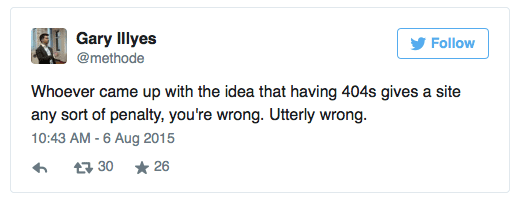
In an interesting conversation on Twitter, Google’s Gary Illyes has confirmed that 404 errors will not lead to Google penalties for your website. 404 errors occur when a web page has been removed from your website or does not exist. Barry Schwartz from Search Engine Roundtable explained that there is a rumor out there that “having a site with some 404ed pages will lead to a Google Penalty.”. Google has now confirmed this.https://platform.twitter.com/embed/index.html?dnt=false&embedId=twitter-widget-0&frame=false&hideCard=false&hideThread=false&id=629672123359887361&lang=en&origin=https%3A%2F%2Fgloberunner.com%2F404-errors-wont-cause-a-google-penalty%2F&theme=light&widgetsVersion=219d021%3A1598982042171&width=550px
Google’s @methode said 404s do not lead to Google Penalties https://t.co/WQMmZ4zEA4 pic.twitter.com/MS6sPcUPpW
— Barry Schwartz (@rustybrick) August 7, 2015
I agree that just the existence of 404 errors on your website is not going to lead to a penalty or manual action from Google. There are perfectly legitimate reasons to have 404 errors on your website. For example, if someone is linking to a page on your website with a lot of bad links, then you can move the location of that page to another URL and serve up a 404 error. That will essentially ‘get rid of’ those bad links and not pass them onto the rest of your website. But, that’s all great if those bad links are linking to an internal page on your site: most negative SEO and low quality links I’ve seen tend to be pointed towards a site’s home page.
404s won’t lead to a penalty, but it’s not good for your site overall.
Technically speaking, 404 errors on your website won’t get you a penalty from Google. But, let’s look at it another way: if your internal linking structure is messed up and your site is linking internally to pages that don’t exist, then you’re shooting yourself in the foot. Your 404 errors are causing problems, and you’re also going to cause crawl issues.
So while 404s are not technically going to get you a penalty, you’re just shooting yourself in the foot by not fixing them.
The goes for duplicate content on your website, as well. Unless you have so much of it you’re spamming the search engines, you’re just not going to typically get a penalty from Google just because you have duplicate content on your website.
HOW TO IMPROVE YOUR WEBSITE’S USER EXPERIENCE
by Samantha Arigapudi
Would you stay on a site that’s hard to navigate? How in the world do you get to your cart? Where are the product reviews?
Failure to find what you need means the company lost your business, business that could have led them to more customers and brand ambassadors. User experience is key not only to building your brand but building your sales. If you don’t have the resources to do a complete redevelopment, you can adopt these simple and affordable steps to improve your website’s user experience on the path towards effective digital marketing.
Lead the Way: Easy-to-Use Navigation
Your website should reflect your business plan and vision for your company, meaning it should be clear and organized. Your navigation bar and menus are the landmarks of your site. Instead of burying important information and calls-to-action, provide the tools consumers need to get to where they need to go.
If you’re unsure of where customers are clicking out, run some research and follow the purchase process. Where are customers getting hung up? Maybe a friendly CTA (call-to-action) or redirect is the best way to get them back on track.
Short Attention Spans: Measure Load Speed
Vine, a six-second video feed, is the perfect example of the short attention span we’ve developed in recent years. With a world of information at our fingertips, we’re anxious to access every tidbit right away. Which means, if your page takes more than three seconds to load, you’re in trouble.
Some of the ways to fix your load speed include:
- Indexing your content database (organize content into relevant categories)
- Eliminate unnecessary tracking codes (stick to the important analytics)
- Use Google Search Console’s PageSpeed Insights Tool (get a specific look at what’s slowing down your site)
Google knows how impatient web surfers are and takes page load speed into consideration, especially when it comes to SEO rankings, so use their tools to your advantage.
Keep It Consistent
A consistent layout is reflective of your brand. Is it hodge podge with inconsistent messaging throughout? A consumer might think your brand and customer service is the same way.
Bring credibility to your company by using consistent brand images throughout and using a similar page-to-page layout. Be sure to place attention on your calls-to-action by placing them on the same area on every page.
These are just a few ways you can improve your website’s UX. Still not getting the attention you deserve? Contact us at Globe Runner for a quick, free website audit.
5 TIPS FOR DIGITAL MARKETING SUCCESS
The key to digital marketing success is to deliver a rewarding customer experience that equates to brand and profit growth for your company. Fuel your digital marketing with these 5 tips:
- Track Everything
The goal of digital marketing is to attract your target audience and this means telling them, nicely of course, what to do. You can accomplish this with a call-to-action. Help them help you by using a click-to-call extension that uses something like a tracking number so you can identify and measure which click-through’s measure best. Your focus should be on content with conversion.
- For Social Media…
Be content ready. Identify your audience and three types of buyer categories and their stages in the buying cycle. Use social media to reach your buyers and build a relationship that leads them to your site, to share your content and eventually build a following of brand ambassadors willing to do the same. They take care of the “attract and convert,” cycle for you, but first you need to appeal to who they are as people instead of buyers.
- Optimize, Optimize, Optimize
There’s a reason “O” in SEO means Optimization, and that’s because as a component of digital marketing, search engine optimization means identifying and following the rules of major search engines like Yahoo! and Google. Find the target keyword in your headlines and copy that closely matches keywords in your bid to boost your chances of standing apart from your competitors.
- Bam! Take Mobile Marketing Up a Notch
No digital marketing plan is complete without a mobile approach. First things first, see how your site and click-through’s look on your phone. “Googling” your business is important to do on your desktop but be sure to run the mobile test on your phone as well. Review your business information in search results. With organic search results, you should find the following:
- Your website
- Your social media pages
- Google Maps results
- Sites and online directories on which your business is listed
- Links to verifiable third-party content about your business
When checking on desktop and mobile, check:
- That your business name appears in organic search results
- That your information is up-to-date
- The sentiment behind your reviews
- Whether your site is as it should be when viewed via mobile
- Automate to Increase Engagement
Emails may seem like an out-of-date outreach approach but automation still helps increase engagement. When was the last time you were enticed by an email from your favorite department store only to click and click and click until you purchased a pair of shoes you don’t really need. According to SilverPop, automated emails have an average 23.6% unique open rate and 5.0 click-through rate, which is higher than manual sends.
There is a positive impact from automated emails, especially transactional emails, if you provide additional value: where can they go for help? How can they check their status? For you as the marketer, are there cross sell/upsell opportunities you can provide in the email to take advantage of an email’s shelf life?
Examine your email engagement to see your highest-performing communications and, conversely, where you are performing most poorly. During your examination, look at ways you can incorporate more personalization into your emails (back to the social media tip) to nudge your marketing into that of a top performer’s.
Still need help sailing into the marketing wind? Let us help you kick up your marketing strategy. Contact us today!
TOP 10 GEOGRAPHIC NEW GTLD EXTENSIONS
As part of Globe Runner’s efforts to watch the New gTLD extensions in regards to SEO (Search Engine Optimization) and our SEO Power Rankings Index, we looked at the geographic extensions. We wanted to know which of the new domain extensions actually have live websites being developed on them. And of those developed websites, which new geographic extensions have the best websites on them. Here’s our list of the top 10 geographic New gTLD extensions.
1 .nrw
2 .scot
3 .brussels
4 .eus
5 .bzh
6 .bayern
7 .hamburg
8 .nyc
9 .paris
10 .berlin
Honorable mention:
11 .vegas
12 .quebec
13 .ruhr
How We Determined the Rankings
We looked at the top 500 new gTLD extensions based on number of registrations. Then we pulled all of the websites that have been developed on those new extensions and looked at the quality of those websites. Some of the factors we used to determine quality were the number of backlinks, the Trust of those sites, and the Trust Flow/Citation Flow of those sites. Trust Flow and Citation Flow are Majestic.com quality factors.
For our geographic-related extensions, we determined that a new gTLD domain extension was geographic-related because of the extension’s restrictions. For example, .NRW has restrictions:
— Restricted to individuals with residence in the postal code area of the federal state of North Rhine-Westphalia; or
— individuals that have place of business in connection with self-employment or freelance work in the postal code area of the federal state of North Rhine-Westphalia; or
— entities that have place of business in the postal code area of the federal state of North Rhine-Westphalia
A few of these extensions technically don’t have registrant restrictions (i.e., they don’t have to have an address in the region), but they sites being built on those extensions are related to the region, so we made an exception.

The top sites that we’ve identified during our review of the data include:
https://land.nrw/
http://www.gov.scot/
http://be.brussels/
http://www.eitb.eus/
Our favorite website built on a New gTLD Extension? Of course it has to be the Eiffel Tour website: https://www.toureiffel.paris/fr.
**Note: Keep in mind that this list is based on the quality websites built on these extensions. There are other geographic extensions that are popular that have a lot of registrations and websites–but they didn’t show up on this particular list. Highly trusted websites have to be built on an extension in order for it to be considered and thus show up on this list.
THE CONTENT TAKEOVER
How much content is on the web and how has it grown over the years?
In March 1989, the World Wide Web turned 26. What was once a thing of sci-fi, the web has grown from Star Trek fiction to an everyday survival tool during its 26 years of life. As newspapers become scarcer and books slowly move towards electronic versions, the web has quickly become the hub for a variety of content from all around the world. Now it’s more than just what content is on the internet, it’s also about how users are engaging the content and what they are using to get to it. Let’s take a look at how the web and its content have grown over the years by looking at when programs and other milestones that encourage content marketing came to be:
1895 – 1987 Magazines take off starting the industry for published and print advertising.
1995 Personal homepage service, Geocities, launches.
1996 Placeware starts offering web conferencing services.
1999 Blogger launches.
2001 $20 billion. The amount spent on custom content.
2003 MySpace launches. As does LinkedIn.
2004 a blog is born. Microsoft launches Channel 9, the first ever corporate blog from a big wig company.
- Also, Facebook is launched.
2006 Twitter is born.
2009 Revised FTC endorsements and testimonials guidelines go into effect impacting endorsers and bloggers.
2010 Content Marketing Institute is born.
- 25% of marketing budgets spent on content marketing.
- 88% of all brands use content marketing
2011 Importance of content is starting to take lead. Chief Content Officer Magazine launches in print and digital.
2013 33% of total budget spent by B2B marketers on content marketing initiatives.
- The most popular content marketing tactics include social media, articles, enewsletters and blogs.
2015 70% of B2B marketers are creating more content than they did one year ago, even those who say they are least effective (58%) and those without any type of strategy (56%). (Content Marketing Institute)
We’ve quickly shifted from worrying about prices and promotions to creating a true connection with consumers through content. If marketing used to be about the 4Ps (Product, Place, Price, Promotion) Socialnomics author Erik Qualman claims it’s increasingly about the 4Cs (Creating, Curating, Connecting and Culture).
As content continues to grow, evolve and take over the web, three things are certain. With content you should:
- Always provide value. It’s about building lasting relationships with brand ambassadors excited to spread the word about your product or service.
- It won’t be read because it exists. Use the content to find your audience by making targeted distribution a key component to your overall content marketing strategy—approach owned media, paid media and earned media channels for a strong three-pronged approach.
- Set specific goals. Set clear objectives and measure your success metrics so you can track, measure and optimize against branding campaigns. Instead of being a jack of all trades, create a niche for your brand and lead the way.
How has your practice evolved alongside content and it’s growth over the years?
PERHAPS THE MOST AWESOME TRADE SHOW BOOTH ON EARTH
When trade show booths turn out just perfect
Last week we got an early present from our client National Trade Shows Displays: The new Globe Runner trade show booth. It will be making its debut at this month’s Texas Restaurant Association Marketplace trade show.
For anyone who’s ordering a booth for the first time or replacing their current one, we feel your apprehension. Choosing the right structure, then the right design, and then practicing dismantling and erecting it can be an intimidating exercise. Fortunately NTSD’s David and Cherie Ostermann (here flanking Globe Runner CEO Eric McGehearty) made the process easy and enjoyable. We have to admit the booth is making us pretty excited for the show.
We chose a 10 foot Coyote curved Pop-Up and, to stand out from other exhibitors, decided to go for a whimsical illustration as the backdrop. Hence this fun cow jumping over the moon, one of several illustrations commissioned from artist, illustrator and muralist Jen Carnes of Little Cloud Design.
Thank you National Trade Show Displays, for making this awesome booth. We promise to pack it up properly and not kink it or anything.
And thank you Jen, for this fab drawing. We think it captures the spirit of Globe Runner perfectly.
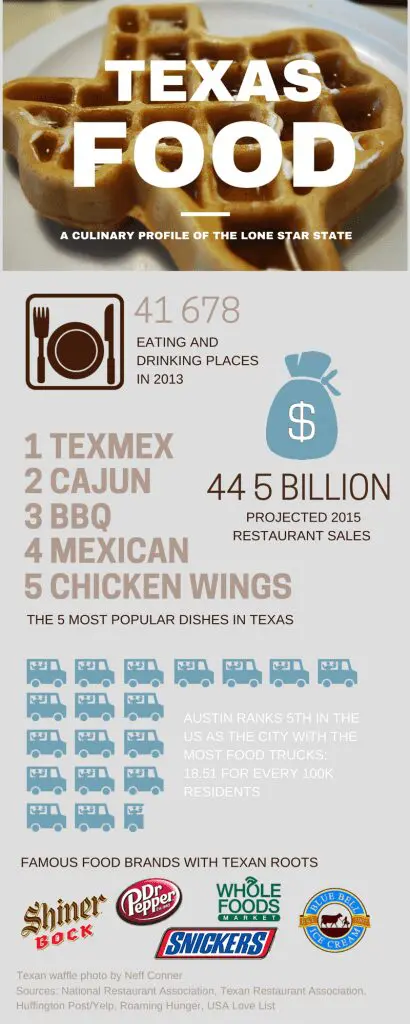
Globe Runner will be at the Texas Restaurant Association Marketplace event on June 28-29, 2015. Visit us at Booth 1210 if you are attending. Eric will also be speaking at the Technology Pavilion about how to get found on Google. Plus: Check out this infographic on Texas food that we created in honor of the occasion.
A TEXAS RESTAURANT ASSOCIATION-INSPIRED INFOGRAPHIC
The Texas Restaurant Association’s annual Marketplace is one of the largest and most prominent food and beverage industry events in the Southwestern region of the United States. Over 300 exhibitors from the restaurant, food supply and food services sector will be at the trade show which will be held at the Dallas Convention Center on June 28 to 29, 2015.
Globe Runner will be exhibiting for the first time at Marketplace, and CEO Eric McGehearty will be speaking at the Technology Pavilion about how to improve your local search rankings. If you are at the event, do drop by our booth or attend Eric’s talks. We have a lot of experience in marketing, branding and SEO for the food and beverage sector, so feel free to pick our brains over these two days!
In the spirit of the occasion (and since Marketplace is making us think about food), we created this short infographic about Texan food stats and famous food brands. Feel free to share it or embed it in your own blog.
- « Previous Page
- 1
- …
- 28
- 29
- 30
- 31
- 32
- …
- 45
- Next Page »