














How to write a great email for your upcoming campaign
Whether you’re sending a single email or crafting one that will be distributed to thousands, there are a number of things you can’t overlook if you want to get the most opens and clicks possible. Sure, you could get lucky and achieve the metrics you’re looking for, but why leave it up to chance? Counting on luck is a bad digital marketing decision.
Subject Line
The email subject line is so important that, if it isn’t carefully crafted, the following suggestions may prove moot. Without it, there’s a pretty good chance they won’t open the email and get to the body copy and the holy grail of digital marketing–the CTA (Call to Action).
The key to creating a great Subject Line is to not give away too much information, but just enough to make the viewer want to open it. Great examples are “What they never tell you about when you file for bankruptcy” or “Don’t do this when applying for a job” or “Are you positive you’re safe from ransomware?”. You don’t want to mislead recipients, but give them just enough info to make them want to peer inside.
Personalizing the Subject Line with the recipient’s first name can vastly improve your open rate. Several studies indicate that doing so enhances opens by anywhere from 35-50%. Also, use your, or another person’s, actual email address so that it shows up as being Sent From. If they receive an email from Sales@ or Marketing@, your open rates will suffer.

Clear, concise; yes, less is more
Sure, you want to display your writing prowess, but don’t get sucked in to writing for yourself. It’s a common mistake, but, remember, you’re writing to get recipients to act on your CTA. Be concise and remember that less is more. Try and keep the email copy to under 200 words and break up the text into a few paragraphs. You don’t want a single, solid one; that will make your 200 words look like a lot more. If you open an email and are hit with several hundred words, your mind immediately calculates the time you’ll have to invest to get through those words. Get to the point, and fast. Your goal is to get them to take action as soon as possible.
Don’t forget the white space. Without it, even the most concisely written copy can appear too long. White space combats clutter, the enemy of good content.
Using images? Include alt-text
Breaking up copy with an image is fine, just make sure it isn’t overpowering. Also, make sure it includes alt-text so it can be displayed on whichever browser the recipient may be using. No alt-text, no image, no good.
It’s all about the CTA
Don’t make CTAs hard to find. They should be prominently displayed, whether it’s clicking on a button, hitting a link, or filling out a form. Remember, that’s the ultimate goal—getting recipients to act on the CTA. You can include additional touchpoints, like social media icons linking to your page, but make sure they don’t interfere with your CTA.

Know your personas
Think about who will be receiving the emails and create personas for them. What will they act on, what will turn them off? If your campaign is targeting C-level professionals, your copy needs to address the types of responsibilities maintained by that level of employee. For them, you may not include as much granular information about a product or service, but more about how it can enhance ROI and affect things like CAPEX or OPEX. In other words, know your audience and write to them.
Words to avoid, lists to exclude
Steer clear of words that can trigger spam filters, like guarantee, winner, order now, free, risk-free, congratulations, etc. They can send your carefully crafted email straight into recipients’ spam folders. And while we’re on the subject, sending out to purchased email lists is another good way to get your emails flagged. If you’re using an Email Service Provider (ESP) and you send to a purchased list, you’re playing with fire. They often contain spam traps, which are emails included in the lists that signal the ESP that it’s a purchased list (they don’t like purchased lists). In other words, the ESP will know that this isn’t a list of recipients who have opted-in to receive the email. And if recipients flag your email as spam, the ESP will soon reach out to you wanting more information on the list, how you got it, etc. Also, purchased lists will often have a lot of hard bounces (bad email addresses), which is another red flag for the ESP.
Don’t forget to Test
Take the time to conduct A/B testing, which tests 2 versions of the email. For instance, you may want to test 2 Subject Lines, so a small percentage of the list receives email A, the other email B. The winning email (the one with the most opens) is then sent to the rest of the list. You can test subject lines, email copy, images, promotions, CTAs, etc. It’s a great way to hone your messaging and efficiently get the most effective version in front of the most amount of people.
Also, test your email in different browsers and on mobile devices. There’s a good chance that at least 50% of your emails will be viewed on a smartphone, and if it doesn’t look right, you’ve essentially scrapped half of the messages sent, maybe more.
Contact the experts
If you need the help of an online marketing agency with more than a decade of experience, Globe Runner is your partner. We are here to help inject your digital marketing initiatives with rocket fuel and launching it to success. If you’re ready to blast off, call us at (972) 472-8528 for a free digital marketing consultation.

Tips on Launching a Retargeting Ad Campaign
If you’ve ever visited a website to research a product, then later see an ad pop up for that exact product, you haven’t just experienced an amazing coincidence. No, you’ve just experienced the magic of retargeting.
Retargeting works on the premise that you can reach consumers when they are ready to make a purchase. Sure, purchasing online makes window shopping easy, but it also means buyers can get sidetracked more easily by an email, IM, phone call, crying baby, knock on the door, etc. However, if they’ve lost their attention, don’t worry; retargeting will get it back.
In the event you’re wondering whether retargeting is worth it, consider this—according to several studies, the average conversion, or purchase, rate for ecommerce websites is only around 2%. That means for every 100 visitors to your site, you’ll make roughly 2 sales. That’s a lot of lost revenue due to attention span interruptions. Without retargeting, you’re hoping those 98 come back. Hope is a bad marketing strategy.
Here’s how retargeting works
Retargeting works by placing a piece of code (AKA pixel) on your website that drops a cookie into each visitor’s browser. So, when they’re browsing on the Internet, they’ll see an ad for your website. Again, it’s not magic; it’s smart marketing. Also, it’s immediate. The second they leave your site, they’ll begin seeing your retargeting ads on sites that host native or display ads.
There are a number of advertising vehicles from which to select if you’re interested in launching a retargeting campaign. There are a slew of vehicles, including Facebook, Instagram, and LinkedIn, to name a few. And then there’s Google Ads, the granddaddy of them all. Google shows your retargeting ad(s) across its vast Google Display Network, which boasts well over 2 million websites.
If you’re ready to enter the world of retargeting, consider the following tips to help ensure you get the most from your retargeting campaign.
Too much is too much
Yes, it’s exciting knowing that you can track website visitors around the Internet and flash your ad in front of them. However, showing that ad too much can actually reduce its effectiveness, not to mention it will cost you more. If they see your add too much, it no longer carries the weight that it does if they see it sparingly. How to fix this? Cap the number of times a visitor can see it in a time frame of your choosing. You can set daily, weekly, or monthly limits, and by ad level, ad group, or per campaign.
If you’re running multiple campaigns, you may want to choose a maximum number of impressions one visitor will see. Remember the info about visitors seeing too many ads? This can apply. Note that the word can is in italics because there’s a good chance you’re running different ads and messaging per campaign. If you set the maximum number of impressions that a single visitor can see in a week, multiply that by the number of campaigns you’re running. That’s the real number of impressions.
Segment your Audience
Think about who is visiting your site—men, women, age, parental status, household income, etc. Consider where visitors are going on your website based on these demographics, along with where they probably are in the buying cycle. Sure, you can run a retargeting campaign that attracts anybody who has visited your website, but that’s not going to convert into sales like a campaign targeting particular demographics. You probably have a pretty good understanding of the types of visitors to a page and the products they’re interested in. Then, craft your retargeting campaigns and messaging to better address particular needs and interests. Is a 55-year-old man checking out a pair of Vans checkerboard shoes. Probably not.
In the event you’re asking yourself How does Google know an Internet browser’s demographics?, it’s a good question. Here’s the answer. Google makes assumptions about all of us based on where we go on the Internet, what we purchase, and a spate of other things. Google gleans information about all of us from our interactions with sites on their display network. On mobile devices, Google does the same and also gets demographic data based on applications users’ access.
Retarget ads based on visitors’ behavior
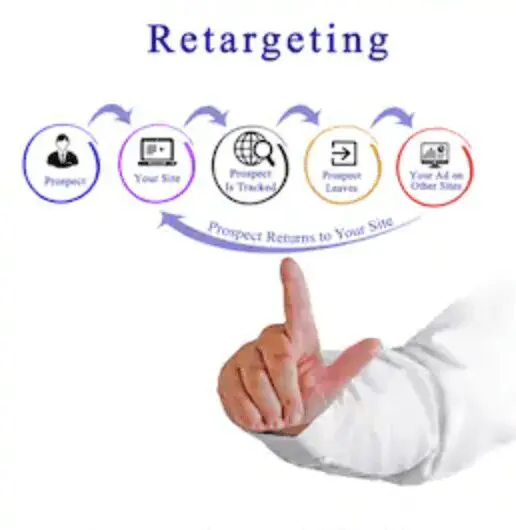
Basically, there are 2 kinds of people who visit your website: ones interested in what you have to offer, and all the others. We’ll call them uninterested. Why pay for ads to target them? If they spend a few seconds on your site, are they interested enough for you to spend ad dollars targeting them? Probably not. You want your ad to be seen by the ones who visit several pages, peruse a variety of products, and spend time on your site. They’re the ones with good intentions and the ones you want to see your retargeted ads.
Campaign Duration
This will require a bit of testing on your part. For a conversion campaign, it’s a good idea to run ads for the length of the sales cycle. And, of course, this will have to adhere to your budget. However, you may find that running a campaign the length of a predetermined sales cycle may not be the best use of ad dollars in the event the metrics indicate that the campaign has lost its steam. And, once again, target certain demographics. If you spray and pray you’ll exhaust your budget much faster. If you’re selling men’s shoes, what’s the point in targeting women? Actually, bad example; women buy men’s shoes more often than men. Maybe a better example is fishing rods or camping gear.
Also, you can set up campaigns seasonally to kick off and end on predetermined dates. For instance, if your company hangs Christmas or holiday lights, you’ll want to spend your marketing dollars during that desirable advertising window.
Don’t set-it-and-forget regarding your creative
If you’re experiencing dwindling success from your retargeting ads, ask yourself one simple question: Am I running the same ad? If you change up your ad copy, that’s great, but change the look, as well. Remember that stuff about visitors getting tired of seeing your ad? Well, maybe it has to do less with seeing your messaging and more about the experience. If they’ve seen too much of the same thing, you’ll lose their attention. Well, grab it back with something different. You’ll probably be surprised how this will buoy your results. Sure, it’ll take a little more work, but it will pay dividends.
Speaking of creative, get familiar with all the ad sizes you’ll need to consider. Take advantage of your resources; Google provides great information that will remove a lot of the mystery—Google Image Ad Requirements.
Retargeting ads, like any type of online advertising, is a great tactic to include in your digital marketing strategy. But it’s not a set-it-and-forget it proposition. It takes time and effort—and ongoing monitoring—to get the results you’re looking for, both in sales and the most efficient use of your advertising budget.
Contact the experts in online advertising
If you need help with your online marketing efforts, Globe Runner is the partner you’re looking for. We are here to help inject your digital marketing initiatives with rocket fuel and launch it to success. If you’re ready to blast off, call us at (972) 538-0260 for a free digital marketing consultation.
5 Ways to Help Your Business Survive (And Even Thrive)
A downturn is no time for downtime, at least when it comes to your business. Even though you may be out of the office, by following these 5 tips you can help your company succeed, now and in the future:
1. Double down on marketing
In today’s world, marketing is a necessity, as vital to your business as the products you make or the services you sell. “A number of studies going back nearly one-century point out the advantages of maintaining or even increasing ad budgets during a weaker economy. Those advertisers that maintained or grew their ad spending increased sales and market share during the recession and afterward” said a 2019 Forbes article titled “When A Recession Comes, Don’t Stop Advertising.” Even big brands can’t afford to skimp. McDonald’s cut its marketing budget during the 1990-91 recession and then saw sales plummet 28% after competitors grabbed a big chunk of the burger chain’s market share. Taco Bell and Pizza Hut, which both increased their advertising dollars, saw their sales soar a whopping 40% and 61%, respectively.
“Successful companies do not abandon their marketing strategies in a recession; they adapt them.” That advice from a 2008 article in Harvard Business Review seems tailor-made for our current situation. Today, companies have to figure out how to reach their customers in a new virtual world; how to offer services or products via new delivery options or apps; how to create online storefronts that will please their loyal customers and entice new ones; how to ensure safety for customers wishing to access physical products or spaces—the list goes on, and the options and opportunities are as varied as the businesses that exist. With so many options, it’s important to implement the strategies that suit your business—and your customer.
2. Beef up your business processes
“Business as usual” doesn’t apply these days. Why not take the opportunity to learn from the changes you’ve had to make?
- Clarify remote working rules, roles, and routines. You can no longer measure an employee’s performance based on time and attendance. Instead, establish clear work productivity standards for individuals and consider creating company-wide policies (e.g. all customer emails are answered by the end of the day). Set a clear chain of command and/or communication. HR Provider Insperity suggests you reserve certain days for meetings, and regularly schedule catch-up calls with remote employees, in part to keep them engaged.
- Evaluate your customer analysis strategy. How well do you know your customers and their behavior, both online and offline? How do you organize your customer data? How do you analyze it, and how often? A world of information is available to you. Now is the time to make sure you are capturing, reviewing, and using that data.
- Utilize online collaboration tools. Collaboration works. Participants in a Stanford study who worked collaboratively attended to their task 64% longer than those who worked by themselves. The collaborators also reported less fatigue, more engagement, and a higher success rate. At Globe Runner, we use Asana as our primary project management system: organizing projects across diverse teams, and simplifying collaboration with team members spread across various time zones.
- Improve your internal communications. When we moved to remote work, we realized quickly that strong communication was foundational to our success. We’ve used Asana for years but found that we now needed to add a lot more detail into each task in order to reduce the number of clarifying questions. So for complex tasks, we started using loom.com, a simple video recording service that allows us to quickly and easily explain the work and properly delegate it to the appropriate team member. By adding a short Loom video and a brief text description to Asana, we’ve reduced the amount of back and forth in the Globe Runner virtual office and increased our overall efficiency.
3. Improve your technology
We rely on technology more than ever, so it’s a good time to analyze what’s working well, what needs improvement, and what’s needed to fill the gaps.
- Review your existing tech. Some issues have probably become apparent. That server in your office is not doing you much good right now. Other systems may not work as well with a scattered, remote team. For instance, we thought our VoIP phone System was a great choice—until we tried to plug phones into our various home units. It took ten business days. When you do put out fires, do so with intention. A day of research can save you and your employees from daily frustration with a product that doesn’t fit your business.
- Once you’ve resolved any major issues, review your not-so-obvious (but just as important) tech areas, like backup. Make certain your system conducts regular automatic backups, and that you and the appropriate members of your team know how to access those backups. Don’t forget to verify their integrity, too.
- Update software, if it’s not done manually. Consider upgrading to newer versions.
- Optimize programs with add-ons and extensions. Choose from a wealth of tools from email filing programs to cloud sharing and storage platforms. The list is endless, and sure to include at least one tool that will increase your business’s efficiency.
- Find tools to facilitate business online. The tasks you used to do in person now have to happen virtually. At Globe Runner, we utilize Zoom for meetings, PandaDoc to develop and digitally sign proposals, and Google Drive to create documents collaboratively and FileCenterDMS.

4. Over-communicate in trying times
In tough times, people need reassurance and clarity. Your customers need to know if you’re still able to serve them, and how you’re modifying your service operations to keep them safe. Your employees need to thoroughly understand their responsibilities, and how any changes will affect them. But if we don’t know what the future holds, how can we offer the sense of security they need? Communicate. The best way to maintain business relationships is reaching out to your team and customers on a regular basis. A few tips:
- Make sure your message is consistent. All of your team members need to know how to respond to questions.
- Provide good information. Offer tips, inspiration, and industry news. Give people a reason to read your email/ blog post/white paper, and to read the next one you send.
- Remember to focus on the receiver. Whether you’re speaking to a customer or an employee, remember that what people want to know is the answer to their questions or the solution to their problems. When relaying your business news in an email, talk about how you can help them. During a phone call, ask how they are doing, how their company is doing, and if there’s anything more you can do for them.
- Rethink social media (at least for now). At the beginning of March, social media engagement was down, but has risen dramatically since stay-at-home orders were issued. Facebook reported that “in the US and UK, Gen Z, Gen X and baby boomers all say they’re spending more time checking social media due to concerns around COVID-19 (27%, 29% and 15% more, respectively).” An April 7th New York Times article noted that Facebook’s overall usage was up by 27%, and You Tube’s by 15.3%. What’s App, Pinterest, Snapchat, Twitter, and LinkedIn are also experiencing higher engagement levels.
- Don’t forget your website. Let site visitors know how you’re conducting business right now: how they can access your services or products, what alternatives you may be offering during this time, and how they can contact you. Encourage them to reach out with any questions, problems, or even ideas. It’s a good time to refresh your site, too. Your website is now your main line of communication to your customers. Make sure it offers pertinent information in a well-designed package.
5. Work with an experienced digital marketing agency
A good digital marketing agency can help you understand your customers, format a solid online strategy, and reach your goals. Look for a team with a deep bench – with the knowledge and experience to recognize, anticipate, and pivot with the new ideas, like those needed right now in this changing market. Globe Runner is an Inc. 5000 company with over ten years of experience with expert marketing professionals and customers who rave about us. We’d love to be your digital marketing agency. Contact us today.
Marketing Your Retail To Go Services
With Texas Governor Greg Abbott’s most recent executive order (April 17, 2020), our state’s non-essential Texas retailers can begin offering “retail to-go” services this Friday. This is a fantastic opportunity for retailers to recoup some of the revenue that was lost over the past month when stores were shuttered. So what is your plan for marketing your retail to-go program?
What is Retail to-Go?
Retail to-go means selling your retail merchandise without customers coming into stores. Stores are still closed to the public, but orders can be accepted online or by phone and retailers can ship merchandise, deliver it or offer curbside pickup.
What Does Retail to-Go Marketing Include?
Depending on your situation, retail to-go marketing may include a wide range of communication vehicles and marketing tactics. It will most definitely include a component of online marketing – a website with photos of your products, business pages on social media channels, and email marketing to your client base. You may have some of these in place already, but what updates are needed to get back in business quickly? Some changes you may consider might include:
- Add e-commerce capabilities to your existing website
- Make website changes or additions to let customers know about retail to-go
- Market and sell your products on your social media pages
- Deploying an email marketing campaign to promote your retail to-go services
- Search engine optimization to ensure your products are discovered by interested customers
- Paid search ads to be sure your products are prominently displayed in searches
Rocket Fuel for Retail
Hopefully, you have been keeping your customers informed during the COVID-19, so you’re on their radar and they’re anticipating your return to the marketplace. The start of retail to-go means it’s time to go full blast. If you need the help of an online marketing agency with more than a decade of experience, Globe Runner is your partner. We are here to help inject your retail operation with rocket fuel, propelling it to success. If you’re ready to blast off, call us at (972) 472-8528 for a free digital marketing consultation.
Now Is The Time Time To Get Creative!
As we face a new reality of battling the coronavirus (COVID-19), your way of life and your way of doing business has likely changed completely, seemingly overnight. While these are challenging times, for many of us, there are opportunities. Throughout history, in times of crisis, adaptability has proven to be an essential ingredient for survival. During wartime, hundreds of U.S. manufacturing companies converted their operations from making consumer goods to items essential for war.
Today, with COVID-19 spreading across the globe, nimble businesses are already adapting to meet changing demands and fill needs. Dozens of alcohol distilleries across the country are using their capabilities to produce and distribute much-needed hand sanitizer. In the UK, Dyson and Rolls Royce are being tapped to manufacture ventilators to treat coronavirus patients. Car services that usually focus on taking travelers to the airport have switched to meal and grocery delivery. Hotel housekeeping services are now sanitizing medical facilities and other venues offering essential services.
To thrive, you must find ways to pivot, to serve existing customers in a new way or use existing assets to tap into a new market. Globe Runner is here to help identify the best ways to get the word out; on your website, through targeted digital advertising, and via email and social media marketing campaigns. Globe Runner’s digital marketing expertise can
- Bring in new customers and clients through Digital Advertising Improve your visibility with search engine optimization
- Add online selling capabilities for products and services through an eCommerce application
- Inform and reassure existing customers
- Improve your online reputation with proactive strategies and messaging
Globe Runner is ready to help your business succeed in any and every way possible. Give us a call today at (972) 499-0453 for a brainstorming session on ways we can help your business.
Sincerely,
Eric McGehearty CEO
Globe Runner
Law Firm PPC for Attorneys
Pay Per Click (PPC) Services for Lawyers
If you’re not satisfied with the search results your law firm’s website is getting, you might want to consider another option: pay per click (PPC), also called paid search advertising. If your field of specialty is particularly competitive, you may have found that your SEO efforts aren’t achieving the results you’re after. You may want to consider PPC advertising to supplement the traffic organic search brings to your site.’
Types of Search Results
There are two types of search results: organic and paid. Organic refers to search results you don’t pay to acquire. If your SEO, blogging and listings are enough to get your website premier search results, that’s fantastic. If not, PPC can help get you more visibility in search engine page results.
When you do a Google search, there are several results at the top of the page with a small “Ad” designation. Those are “Google Ads” paid search results, which is Google’s paid search advertising platform. (While other search engines, like Yahoo and Bing, have similar paid search vehicles, here, we focus on Google Ads because almost 80% of searches are conducted via Google.)
How Paid Search Works
PPC advertising involves an auction, with you (and your competitors) bidding on keywords (e.g. Dallas Estate Planning Attorney). If, when, and where your ads appear in a Google search is determined by your Ad Rank, which is calculated by your maximum cost-per-click bid (the highest price you are willing to pay for a click on your ad) and your ad’s quality score.
Obtaining page one results from paid search advertising takes more than simply outbidding your competitors. If your max bid is $2 and your quality score is the highest of all bidders in the auction, your ad might appear higher than an ad with a $6 max bid but a lower quality score. You are only charged when a viewer clicks on your ad and is directed to your website. Quality score plays a big role in determining ad position.
How is Quality Score Calculated?
Quality score is a measure of the quality of your ad and its landing page, relative to the keyword. Ad quality is determined by factors such as expected click-through-rate, the ad’s relevance, and the landing page experience, which includes relevance, page load speed, and usability on mobile devices. The bottom line is, you can’t buy your way into the top position on Google Ads. You must optimize your ads and your website to be successful with PPC. In short, the higher the quality of your ads and landing pages, the better the return on your investment (ROI).
PPC advertising certainly isn’t a set it and forget it proposition. Each time someone performs a search, a new auction is conducted. Advertisers adjust bids, ad spend, ads, and other factors on a daily basis. And in an effort to improve their product and stay on top, Google updates, revised and changes Ads continuously. So, what worked well last week might produce different results today.
LAW FIRM PRACTICE AREAS WE OFFER LEGAL MARKETING SERVICES FOR
Bankruptcy
Business Law
Business Litigation
Child Custody
Civil Litigation
Corporate Law
Criminal Law
Divorce
DUI/DWI
Estate Planning
Family Law
General Practice
Health Care
Immigration
Labor and Employment
Landlord and Tenant Law
Libel, Slander and Defamation
Medical Malpractice
Medicare and Medicaid
Personal Injury
Real Estate
Social Security Disability
Wills and Probate
Workers Compensation
For more information about PPC for attorneys, contact the law firm marketing experts at Globe Runner. We specialize in helping law firms get the most out of their paid search advertising dollars.


Why Your Marketing Needs Branding Guidelines And How To Create Them
Whether you’re a one-woman business or a multinational corporation, strong branding is the hallmark of a trustworthy, professional organization.
Clearly defining your strategy and maintaining your brand consistently across an endless array of marketing channels is a skill best served by official branding guidelines.
Looking to put out marketing messages that are so evidently you make your competition an afterthought? Take out a pen and paper. We’re about to give you a crash course in developing and creating branding guidelines for your business.
What are the Basics of Branding Guidelines?
Your brand is the face, voice, and personality of your business. The main goal of your branding guidelines is to strategically and definitively spell out how all marketing collateral should sound and appear to the outside world.
Done right, they ensure anyone who’s read them – freelance contractor to CFO – can step in and design social media posts, make updates to your website, or put together written informational material about how to represent your brand without an in-person play-by-play.
What do Branding Guidelines Include?
Many of the elements you’ll want to include in your branding guidelines are somewhat obvious – others are a little more nuanced but just as important so you don’t end up on this list of social media fails.
Start by scoping the following brand subtleties:
- Attributes. What would a potential hire, future customer, or business partner find when they Google about you? Are you an Inc. 5000 recognized business? An SEO expert? Addy award-winning company? (Oh wait, that’s us.) Start with the high-level view and get granular from there.
- Brand personality. Are you bold and groundbreaking? Cautious and thorough? Selective and specialized? Genuine and compassionate? If you’re having trouble putting these into words, think of what a good “culture fit” would be if you were bringing on a new member of your team.
- Core values. These are internal messages that guide your day-to-day. You might share them with the world, but they’re primarily used to steer your marketing and operation efforts.
- Target audience. Here’s where our dear old friend the buyer persona takes center stage. Use them to help you craft compelling collateral and tantalizing turns of phrase that capture their full concentration.
Next, move on to the visual brand elements that represent your brand:
- Color usage. What specific colors do you want to be used? Which should be used together, and what should be avoided? Get clear about the vividness or gradation you want to be applied and provide specific Pantone reference numbers where possible.
- Typography. Fonts make a huge difference in conveying your brand’s personality. Make sure you have a list of typography that works well together and defines which ones to use for headlines and subheadlines, web content, blog posts, etc.
- Iconography. Will icons that help users navigate your website be hand-drawn? Cartoon-ish? Image-based?
- Photos and imagery. Will images be clean with tons of negative space throughout? Or color-saturated? List feeling words to help content creators choose images and photographs that mirror the brand personality.
- Logo usage and variations. Your brand’s logo is your calling card – the most recognizable piece of the branding puzzle. Be sure to give written instructions about which logo variations are to be used when. Be it as watermarks on all your social media posts or as a condensed or expanded version of itself, cite specific examples including which size and color logo variations are appropriate in different settings.
Round out your branding guide by defining your written voice:
- Tone. Are you warm and empathetic? Authoritative and knowledgeable?
- Topics. Which are the most pertinent topics for your industry? Which should writers steer clear of?
- Grammar. List all possible particularities here. Oxford comma stickler? Hate hyphens? Are you APA, Chicago, or elements of style devouts? The people want to know.
- Emoji-usage. Some brands are pro – some very, very anti. There’s no right or wrong answer so long as your writing guidelines specify one way or another.
- Expletive and punctuation usage. Many brands rely on the use of curse words to pack a punch and shock the reader into paying attention. These more expressive brands are often bent on using exclamation points in their marketing materials. If these rub you the wrong way, you’re not alone. Just spell it out!
Whether you’re a start-up or reorganizing your small business after decades in the industry, creating branding guidelines can quickly help you establish your organization as leaders in the field and make you instantly recognizable. Even a simple sketch up of these basic branding elements can deliver huge returns.
Want a branding expert to help you put guidelines together? We’re on it!
How to Come Up With Irresistible Topics For Your Content Marketing
Blog posts that make headlines. Viral social media posts. Web series watched at breakneck rates. That’s the power of well-curated content marketing.
But it’s not enough to have Pulitzer Prize-worthy copy and National Geographic-style imagery. Truly tempting content often begins with one thing: topics that are relevant to your target audience.
Choosing the right topics for your content marketing efforts is part art, part science, and these trade secrets are just the boost yours needs to start improving their ROI.
1. Talk about the topical.
You don’t want to talk about trends exclusively, but if there’s a relevant breakout story that’s even semi-related to your brand, it’s worth talking about while it’s timely.
One free tool that will give you endless easy-to-use data is Google Trends. Whether you want to explore the topics that are breaking the internet that week, or search for something related to your business, this is the place to start.
The very top section allows you to enter a search term or topic you’re interested in. From there you can scroll to the bottom of the page to see related topics that might be more niche and of interest to your readership.
You can keep scrolling down the trends.google.com homepage to see recent stories and trends the internet is already consuming.
Just make sure to exercise all possible channels to help disseminate your high competition topics. We’re talking paid advertising, influencer partnerships, and content with high production value.
2. Get niche.
In the same way, long-tail keywords can help you zero in on topics your target audience is searching for, niche topics that are less competitive tend to yield higher results.
Let’s take content marketing vs influencer marketing as an example. The former is a household name – one that established businesses know they must use in order to stay relevant. However, influencer marketing is an emerging frontier where social media brand ambassadors are just beginning to establish themselves.
Point is, choosing to write about a topic that’s hugely relevant for your brand or industry, even if it’s not well-known yet, can put you at the forefront of thought leadership and bring in loads of new subscribers.
3. Pick network-specific topics.
Whether throwing your hat in the meme ring or comparing terminology used on different social media platforms, make sure to keep where you plan to share your content top of mind and create accordingly.
You can also promote the content differently on various networks for a cross-channel attention grab.
4. Repurpose once-popular content.
Don’t reinvent the wheel. If you had a once off-the-charts piece of content that has since gone dormant, you can likely revive it with newer, more engaging topic phrases.
Whether you republish it on your own site or send it to affiliate sites to remarket it to different audiences, it’s a great way to make your content marketing do double duty without putting in a lot of extra hours.
5. Use content marketing tools.
Remember that you never have to do it all on your own. There are plenty of content marketing tools available to you at low to no cost.
Paid versions give you invaluable insights to see what your audience is searching for, the channels they’re using to find it, and how the search volumes compare over time.
Remember that what you’re not writing about, your competition probably is. Staying ahead of the curve – or at least following along its trajectory- is the best way to ensure your content marketing topics are timely and click-worthy.
Need some help putting pen to paper? Let us do the legwork for you!
Are You Showcasing Your Social Proof?
Trust. It can be built and it can be earned, but it’s rarely instant.
As customers grow more and more wary of brands and businesses they don’t know, gaining their trust upfront is your main marketing objective.
Social proof is your ace in the hole when it comes to influencing visitors and facilitating new relationships. Here’s a high-level overview of what it is, why it’s so valuable, and how to showcase it.
What is Social Proof?
This social and psychological theory has been around since 1984 when Dr. Robert Cialdini coined it in his manifesto, Influence.
In essence, social proof describes the human tendency to “follow the crowd”. Cialdini and marketing mavens understand that, as social creatures, we tend to observe the behaviors and opinions of others, and direct our actions to match, assuming what most people do is the “correct” way to be.
And though you may think of yourself as a truly independent, unique flower, we’re guessing social proof has influenced your own decisions from time to time.
Ever stopped to read a social media update that already has tons of comments and reactions? Or tune in to a new sitcom that’s getting tons of buzz?
Bingo. That’s social proof.
Why is social proof so irresistible? Simple. It validates the user’s interest in your product, service, or piece of content and promises they won’t be wasting time or money by engaging with it.
Where can you use social proof? Easy. Anywhere you have an online presence, from your website to your social media channels and beyond.
Now that you have a sense of what social proof entails, here’s how you can utilize the power of group influence in your own marketing tactics.
1. Go for quantity.
Would you trust an unknown brand that had seven likes or 700? That’s what we thought. Whether looking up recipe ratings or follower counts on your social media pages, customers are looking for signs of your popularity. Focus on increasing these numbers to give your business some off the cuff credibility.
2. Share user-generated content.
Anyone sharing content about your brand deserves thanks, praise, and maybe a small parade. Or, you could acknowledge them by sharing the post with your network. Not only is it a show of appreciation, but it also showcases some serious social proof. That’s because user-generated content is perceived as more genuine and relatable than paid ads or sponsorships.
3. Display reviews and ratings.
You work hard to make sure your customers are satisfied. Once they are, collect and display them on your website, Google Knowledge Panel, Facebook, etc. There’s no better marketing than the praise you collect and show from your peers.
4. Show off your endorsements.
Influencer marketing has come a long way in recent years. The trick with paid-partnerships is to ensure they are authentic. Whether you partner with an industry expert or a respected blogger in your field, ensure the praise is genuine. Your customers are likely to reject anything too “salesy.”

5. Humanize your testimonials.
Without a photo to accompany your testimonials, they’re simply words on a site. Though they still represent your brand well, you need a little more credibility as an unfamiliar brand. Make sure you take every opportunity to personalize them with a photo, location, title, etc.
6. Create case studies.
Customer success stories are huge boons for your brand. Stories capture social proof in a way that’s engaging and relatable. Case studies make your claims concrete and tell potential customers their problems are not only common but also solvable.

7. Offer some authority.
Authority begets authority. Meaning, if your brand is worth its weight in salt, you’ll be able to show other respected companies who are associated with you. Be it a display with all your client logos or an ‘as seen in’ like Globe Runner sports, it gives your brand instant integrity.
There you have it. The social proof is in the pudding. If you’re not already leveraging genuine peer-praise in your marketing strategy, time to turn over the mic to your current customers.
- « Previous Page
- 1
- …
- 5
- 6
- 7
- 8
- 9
- …
- 44
- Next Page »