











DIGITAL MARKETING TRENDS TO RULE 2018: Q4
Part 4 of a quarterly digital marketing guide from our agency experts.
They say all good things must come to an end. In this final segment of our quarterly digital marketing trends for 2018, we’re committed to helping you complete the year on top of the world.

For the last time this calendar year, we’ve used our collective brainpower to construct a snapshot of the digital landscape. Flashpoints in SEO strategies and social media marketing, as well as PPC and web dev developments, await you.
Think back on your business goals at the beginning of the year. We’re here to make sure no box is left unchecked. As you prepare to blast out of 2018 and into the next fiscal year, let this final digital marketing mix help you warp speed past the competition.
Here’s your digital dose of everything fueling 2018 marketing trends in Q4:
Technical SEO/Link Building:
1. FAQ, Q&A and How -to search snippet results
Soon there will be even more ways to showcase your content in Google. At last month’s Singapore conference, Google showed what types of previews users will see in their search results. The idea is to use a variety of Q&A, FAQ, or How-to formats to make sure search results are as relevant and useful as possible.
2. New Search Console
Soon, owners will have more access to manage access and adjust permissions for users and other sites. Reporting features are also more robust, promising swift and welcomed changes to the search console.
3.Responsive search ads
Could you use a third headline and little more descriptive text in your responsive search ads? Google has given the green light for you to text long and prosper. You’ll now have up to 90 characters to make your elevator pitch in responsive and text ads!
Social/Content Marketing:
1. Hootsuite updates
Hootsuite Inbox Beta gives you swift, consolidated access to your Twitter Direct Messages and Facebook Private Messages. If you’re looking for an additional channel to connect with customers, this will help. Monitor your messages from multiple profiles for increased oversight of complaints and compliments. Be aware these have taken the place of your Twitter Inbox and Outbox Direct Message Streams.
Hootsuite Explore isn’t yet available to everyone, but likely will be. The feature helps source brand mentions from anywhere on the web so you can tune into the conversations that matter most. They’ll even put them in a timeline where you can segment and analyze based on filters like the location.
2. Live video!
It’s become a big deal on social networks like Facebook. You’ve probably seen them start to pop up on the right-hand side of your feed. Now, you can read comments and respond to users in real-time. Why is this important? According to Livestream, “80% of audiences prefer watching live video from brands as opposed to reading a blog. And 82% of consumers say they would rather watch live videos than read social media posts.”
3. Chatbots
These digital conversation starters themselves are nothing new, but they are growing and integrating with all variety of social media platforms. For instance, Pizza Hut is one of the first national chains to allow customers to order food through their social media accounts using a chatbot.
4. Influencer Marketing
We’re no strangers to influencer marketing strategies. If you read our blog you’re in on them, too. Now, instead of partnering with celebs and other big-time figures, companies are increasing their credibility with micro influencers. According to one Forbes report, “Research shows that micro influencers have 60% higher engagement rates than traditional celebrity influencers.” The same study suggests a more than micro 22% increase in your conversation rates using the tactic.
PPC:
1. Google AdWords rebrands to Google Ads
The latest AdWords update ushers in a big push for machine learning and smart ads. It comes with a new marketing platform and Ad Manager to help you advertise over multiple channels while making sure you’re appealing to the right target audience.
2. New Expanded Text Ads
Differentiating yourself from the competing links on a SERP just got easier. If you feel like you’re having déjà vu it’s because we already alluded to this in our SEO link building section. It’s important enough that it bears repeating. What can the three headlines and expanded 90-character count descriptions do for your brand? A lot. One Wordstream piece reported, “Google found these larger ads received 15% more clicks than other ad formats…[and] saw that advertisers increased their ad CTR by an average of 20% after making the change.”
3. Updated Exact Match Keywords
As culture evolves so does our language. Dictionaries are updated with several new words a year and our day-to-day lexicon shifts with the times. How we search is following suit. Very soon, exact match keywords no longer need be exact to show up in search results. They need only be variants that convey the same meaning through synonyms, paraphrases, and other results that clearly satisfy the user’s original intent.
Website/development:
Our fearless web dev keeps us abreast on all things front and back end. Here are some quick updates that made it across the desk last month.
- Chrome 70 is now in beta
- Chrome (68) brings a new “not secure” notification when visiting HTTP pages
- Firefox 62 supporting variable web fonts
- PHP7.3 is coming soon
- TypeScript 3.0 was released
- Safari’s Intelligent Tracking Prevention (ITP) and how to debug websites
- Starting in October, most browsers will distrust Symantec TLS certificates entirely
Whatever your hopes for expansion were in 2018, lead generation to increased web traffic, we hope these guides have helped you navigate the terrain successfully. Until next year!
TAKING A BUSINESS BREAK: TO-DOS BEFORE VACATION MODE
When you eat, sleep, and breathe work, the thought of taking a vacation can feel like being cut off from a critical lifeline. Yet, you know what all work and no play does to a person.
To be most effective, your brain needs a break, no bones about it. If you’ve been letting your vacation time accrue because you’re worried about what will happen in your absence, this guide is for you. With the holidays approaching, now’s the time to implement some best practices that can set you and your brand up for some much-deserved R +R.
Ahead are our top preparatory to-dos for a seamless small business vacation.
1. List your daily duties.
Make a comprehensive list of what you do during the workday. Go moment by moment and include everything but the bathroom breaks. Cross off anything non-essential so your employees divide and conquer the rest.
2. Practice with your proxies.
Observe your staff for a few weeks prior to your vacation. Let them know you’ll be assigning out certain duties based on fit. Take a few minutes each day to train them up by asking ‘what-if’ scenarios. Be sure to let them know this is a great opportunity for future promotions and you’re committed to helping them rise to the occasion.
3. Designate and communicate.
Once you’re confident you’ve found a fill-in or two, be explicit about the responsibilities they’ll each be tasked with. Have a one-on-one meeting where they can ask clarifying questions. Then, communicate with customers, vendors, and other internal staff. Make introductions and let your constituents know they’ll be in great hands while you’re away.
4.Prepare for the worst.
Still feeling afraid about leaving the ship “unattended”? Or maybe your employees are concerned about steering it? Complete a fear-setting exercise. It’s a tactic used by successful business owners like Tim Ferris. Divide a sheet of paper into three columns labeled, “Define,” “Prevent,” and “Repair.” List out what you’re most fearful of, brainstorm about ways you could preemptively correct it, and finally, pen some reparative actions that could be taken should the worst come to pass. At the very least, it’ll help the entire team feel confident about finding a solution in your absence.
5. Schedule content in advance.
Social media never takes a break. Creating a content calendar and scheduling posts in a program like Hootsuite can help you keep your audiences engaged, even while you’re actively disengaging.
6. Plan for paid ads.
Make the most of your Pay-Per-Click campaigns or paid social media advertising. True, you need them to help you reach the right target audiences, but what good are the qualifying leads and increased traffic steaming onto your site if there’s no one there to greet and connect with them? It’s worth hiring a digital marketing firm to temporarily keep a watchful eye over your online advertising. They’re trained to monitor daily ad spend and keep bids controlled so you can hit the ground running upon your return.
7. Address accessibility with your admin.
Make sure at least one person has access to you at all times. Designate a point person on your administrative staff who’ll act as the gatekeeper. Make sure you trust their judgment and have communicated in advance about what fires should be put out by you and you alone versus minor incidents that can be handled with the team’s collective brainpower.
8. Debrief upon return.
Hopefully this won’t be the last vacation you take for another few years. It’s important to gather feedback from your team about what went well and what could have used additional support. That way, next time you’re making preparations to take time off, you’ll be aware of areas that require extra coverage.
In the end, even the best-laid-plans might not be enough to prevent a small snafu. However, with some advanced prep, you can ensure things run as smoothly as possible in your absence and use everything else as a learning opportunity for the next foray into vacay. Need a backup plan? Let us take some of the heat while you’re away.
INSTA IN APP PAY
Have you ever seen a selfie of a friend (or celebrity) on social media and immediately wanted to comment, “Where did you get that shirt?” Or noticed a single knick-knack in a composed lifestyle shot and been frustrated when you couldn’t seem to find that one item on the retailer’s website? Or overall just wished that you could tap on a photo of something (anything!) and have the option to ‘add to cart’? If you answered yes to any of those questions, we’ve got good news for you: Instagram has introduced online shopping and in-app payments on their platform!
In this video, we’ll discuss “image-based shopping” and what it can mean for retailers. We’re especially intrigued by the idea of ensemble shots, in which an interested viewer can click on individual items in a photo to learn more details about each, or simply buy everything all at once. Now, the technology for doing so isn’t quite here yet (at least not for ALL Instagram users), but we can definitely see marketing trends headed in this direction. It’ll be a relatively new way for ordinary people to make purchases, as well as a new revenue stream for marketers and our clients to explore.
6 BEST PODCASTS BUSINESS OWNERS SHOULD BE LISTENING TO
For a digital marketing agency, we sure do talk a lot about radio, especially podcasts.
Last week, we were practically pushy about the ways starting a podcast can boost your business and improve your SEO ranking. So, have you recorded one yet? Great! Let us know where to subscribe.
If, however, you’re still in the research phase of your podcast journey, this post has come to your aid. Or, maybe you’re simply looking for a way to grow your knowledge base, but can’t seem to find the time for books or seminars. Good thing pods are portable and marvelous for multitasking.
We’ve taken the guesswork out of your search for the best of the earbuds. Ahead is a concentrated mix of six podcasts from businesses small and large that we consider to be compulsory.
1. The Introvert Entrepreneur
Hosted by:Beth Buelow
Episode Length:Up to 45 minutes
Twitter:@Introvertcoach
Website: https://theintrovertentrepreneur.com/
What to know about the show:
We live in a world that values extroversion, silencing the gifts and talents of those on the other side of the coin. The Introvert Entrepreneur gives the floor to introverts-turned-successful-business-owners. Bigwigs like Inc. and Entrepreneur have recognized the pod on ‘best of’ lists and the show focuses on a range of relatable topics like leadership and personal growth.
2. Being Boss
Hosted by: Emily Thompson + Kathleen Shannon
Episode Length: 10-minute minisodes to 1 hour or more
Subscribe on: https://beingboss.club
What to know about the show:
Want to launch a brand or be your own boss? These business besties are here to help. The show has been downloaded more than 5 million times – and for good reason. It hosts global guests like Brene Brown and Marie Forelo, media like Forbes and Huffington Post listen, too. Basically, if you want your passion to start earning you a paycheck, tune in and level up.
3. Akimbo: A Podcast from Seth Godin
Hosted by: Seth Godin
Episode Length: About 20 minutes
Subscribe on: https://www.akimbo.link/
What to know about the show:
Yes, that Seth Godin. Post Purple Cow fame, he’s gone on to continually inspire millions with his blog writing. Now, he lends his voice to help game changers who want to shift entire cultures. Named after an ancient word meaning “bend,” the podcast promises to aid those aiming to make a difference in the world. Looking for a more traditional scoop from Seth? Check out his other show, Seth Godin’s Start Up School.
4. Online Marketing Made Easy
Hosted by: Amy Porterfield
Episode Length: 30-45 Minutes
Subscribe on: https://www.amyporterfield.com/amy-porterfield-podcast/
What to know about the show:
If you want to simplify your understanding of this complicated field, Amy Porterfield’s podcast promotes just that. Whether you run an ecommerce store, or just need a few tried and true tips to monetize your brand, Online Marketing Made Easy has you covered. Her digital marketing strategies touch on everything from email segmentation and engaging drip campaigns to social media best practices and business blogging.
5. School of Greatness
Hosted by: Lewis Howes
Episode Length: An hour or more
Subscribe on: https://lewishowes.com/sogpodcast/
What to know about the show:
What could a former pro athlete know about making it in the business world? Turns out, a lot. School of Greatness is a top-rated podcast, hosting greats to bring out the greatness in you. Howes is a New York Times best-selling author who’s broadcasting his message of empowerment to help you reach new heights in your career and in your life. Cozy up to guests like Tony Robbins and Arianna Huffington for a serious dose of inspiration.
6. Marketing School
Hosted by: Neil Patel & Eric Siu
Episode Length: 5-10 Minutes
Subscribe on: https://marketingschool.io
What to know about the show:
For the time deprived, search marketing specialists Neil Patel and Eric Siu offer actionable, digestible small business marketing know-how. Each episode of their pod, Marketing School, is just 5 to 10 minutes each. They waste no time bringing you marketing tips you can implement straight away. It’s short, it’s sweet, it’s strategic, it’s Marketing School.
From overcoming your introversion to mastering online marketing, these six entrepreneur podcasts, make it easy to listen while you work.
Prefer to watch and learn? Subscribe to our YouTube channel for Season 5 of our weekly digital marketing video series where SEO and CEO extraordinaire, Eric, shares the latest in industry news and marketing strategies. On the docket: insights on the new PageRank Patent Update, Facebook’s Cryptocurrency, and Netflix’s investment in billboards.
HARNESSING THE MAGIC OF META DESCRIPTIONS FOR INCREASED WEB TRAFFIC
By definition, ‘meta’ describes a thing that refers to itself. The word might also conjure something small. Both of these descriptors appropriately characterize the snippet that HTML tags use to summarize a page’s primary content and focus.
But these brief precursors are no small matter. They’re arguably the most significant determinant for whether or not your site gets visited or passed over by a potential customer.
And yet, in short supply these shorties are not – every second, search engines flash millions of metas in response to search queries. Here’s how to stay above the fray and increase your web traffic with compelling meta descriptions.
More about Metas
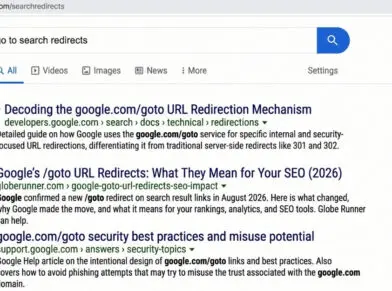
Meta descriptions are the short block of text that sits below a suggested website on the search engine results page (SERP) – see below. The space in which they appear is limited, and so are your characters.
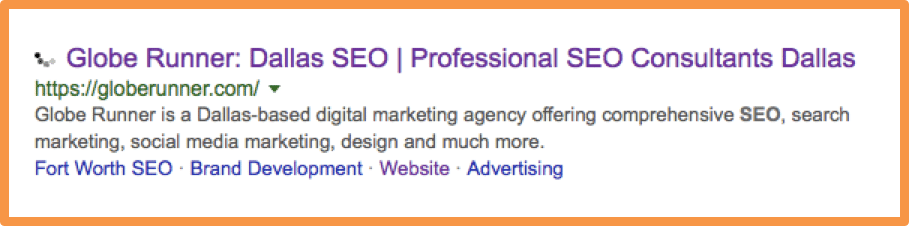
In late 2017 Google released an algorithm update that lengthened meta descriptions to 320 characters. Since then, there’s been some debate about length. Our recommendation? Pack in the most critical elements within about 160 characters. Otherwise, you risk all that compelling content being trunked (by the search engines that be).
How do Meta Descriptions Improve your Page Rank?
“Officially” you’ll reap no explicit ranking benefits from your meta descriptions. True, they aren’t directly built into the algorithm, but they still heavily impact your site’s click-through-rate (CTR). This, in turn, tells Google whether or not you’re a good match for specific search queries and subsequently where to order you on the SERP.
Writing Magical Meta Descriptions
Google Dallas SEO agency and you’ll get an onslaught of companies vying for your business. Before a customer ever has the chance to be swayed by your company’s prestigious awards, expert web design, or testimonials, the 2-3 sentences in your meta description will form the basis of their decision.
Meta descriptions are a fantastic way to your showcase services and collect clicks, so long as you:
- Write them like an elevator pitch. If you had just 15-seconds to make your sell, what would you say? Now’s the time to make sure your words are concentrated and direct, punchy and enticing. There’s no room for fluff. Every syllable counts.
- Create one for each page. Unique meta descriptions are a critical element of every page on your website. The more context and clarity you can provide up front, the more clicks you can solicit. Give each page the stage for a few brief seconds to capitalize on its full potential.
- Proofread then re-read. Give your meta copy the same level of care you would a billboard. Though the spacing may be small, the impact is substantial. Typos in your meta descriptions rob you of legitimacy and could very well cost you potential sales.
- Include a CTA. Whether you want them to learn more about your product, try it out risk-free, or redeem a discount code, the more action-oriented perks you give, the more clicks you’ll get.
- Make them keyword-focused. You aren’t turning up in searches by pure luck. Users are on the hunt for something specific. Make sure you target that special something with well-researched keywords. Not only does it make the search engines take notice, potential customers will, too.
Get meta with your meta descriptions and optimize them down to the smallest detail. Doing so could mean the difference between ranking on Google’s first page and being crowded out by a louder, more compelling online elevator pitch.
Want to increase your page ranking on Google SERPs? Let us give you a lift.
NATIONAL IT PROFESSIONALS DAY 2018
Hey end-user! Have you thanked your bit ’n’ bytes virtuoso lately? Your IT professional does not live on caffeine and trouble tickets alone!
If a note of praise or thank you is overdue, you are in luck. Tuesday, September 18, is National IT Professionals Day. It is the perfect opportunity to recognize and appreciate the work you know and the work you don’t that your information technology professional performs daily, weekends and nights too.
What IT Professionals Do for You
Let’s put this in perspective. Your IT guy or gal is the one who sets up your email and ensures you do not become a spam magnet; patches your organizations’ network vulnerabilities; and resets your password _ again _ because you forgot yours while sipping pina coladas in Cancun.
IT professionals are becoming ever more critical to the core functions of all businesses in all sectors, from Main Street to the multi-national that never sleeps. The Bureau of Labor Statistics predicts that the number of IT jobs will grow by about 500,000 positions in the next seven years.
The profession’s importance is growing leaps and bounds because IT is not just on your desk or in your ear. It is everywhere: In the workshop’s lathe, your car’s tires, in your Google Assistant. McDonald’s knows exactly how important the geeks in the server room are. Just watch this TV commercial, a quintessential favorite of IT pros.
How to Show Your Appreciation
If you take the step to celebrate the day, no matter how modestly, it is sure to surprise and delight your Rails-literate code wrangler. In fact, this year will be the just third annual national day recognizing IT professionals.
A card, a cupcake, or an impromptu office gathering to celebrate this highly skilled employee’s valor and patience in saving everyone from a motherboard meltdown will do. However, if you are an overachiever and know just what flavor of geekiness your IT professional subscribes to, swag that is off the chain is just a click away.
Most important of all will be a sincere “thank you.” The IT pro addresses error codes and smashing email delivered malware (despite repeated warnings), all while keeping the solid-state and clouded architecture, and the core applications working seamlessly.
Charles M. Schwab, an unquestionable financial guru said, “I consider my ability to arouse enthusiasm among men the greatest asset I possess. The way to develop the best that is in a man is by appreciation and encouragement.”
SHOULD YOU START A PODCAST FOR YOUR BUSINESS?
Once upon a time, it was all about campfires not TVs, social media, or even radio that held us captive. The stories told around the fire helped shape entire cultures and solidify communities.
As the oldest form of education, storytelling lives on in our consciousness and the ancient art continues to form indelible tenets of our modern world. It predates writing and still manages to stay distinct and relevant after all these centuries.
In their most recent chapter, stories have found a new home. Through podcasts, they can now venture to far away lands, go back in time, and project into the future. They can travel by invisible magic, radiating through headphones or car speakers.
Audiences hungrily devour them whole. With their insatiable appetite for information and good storytelling, podcasts are consumable content with the rare ability to practically hypnotize your target audience.
In a world of shrinking attention spans, there’s never been a better time for high-quality audio content. Looking for a new way to promote your business? These podcast tips will help your brand story take center stage.
Why your Business Should Start a Podcast
- Audiences will follow the sound of your voice. Reading is a silent activity – one that rarely, if ever, conveys your point with the inflection you wrote it. That’s because reading happens in our head, and the writer is often cast in our own voice. True, we’re big proponents of creating a discernible brand voice with your copy. But there’s something incredibly personal about speaking into someone’s ear. It captures their attention and hearts, beckoning them to trail your words like a crumb-lined path.
- It’s easy to digest and recall them. Podcasts can be consumed while tending to life’s myriad demands. They can co-pilot a drive to work, be someone’s sous chef in the kitchen, or take the place of a workout buddy. No need to stop, focus and devote swaths of time most of us don’t have. Information told in storytelling formats is also shown to aid memory and, done right, can increase CRO.
- Podcasts have multiple distribution channels. If you have a Mac, you know that iTunes search results often populate before you ever finish typing a query into Safari. Google Play, Sticher, iHeartRadio, and even Soundcloud are all examples of other podcast hosting platforms that are happy to help you get the word out. There are a number of other distribution strategies, including keyword and SEO optimization, which can promote your podcast organically.
- The market isn’t saturated with storytellers. At least not yet. Shows like Serial have only just recently really put podcasts on the map. We’re just starting to see the swell before the tsunami. Now’s the time to build your audience and get them hooked on your commendable content before the sea becomes so large it drowns out your brand voice.
- They won’t blow your marketing budget. All you need are a host and a mic to get started. For less than $75, you can find a piece of recording equipment and editing software to help broadcast your message to the masses. What’s more, a podcast can bring in enough leads and sales to quickly pay for itself.
For as long as there’s been language, there have been stories. Use podcasts to share tales with your target audience for a happily ever after.
This doesn’t have to be the end! If you need help casting yourself into the world of podcasts, we can help your journey.
FACEBOOK CRYPTO
Cryptocurrencies. Depending upon who you ask, they’re either the next big thing to take e-commerce by storm, or they’re just an overhyped fad that will crash much sooner than enthusiasts want to admit. Regardless of your feelings on the matter, learning about this new technology can be interesting, especially when you see how many different cryptocurrencies are currently available for purchase and the sheer volume of new currencies that are currently in development. Bitcoin is only the most famous example of cryptocurrency—it’s definitely not the only player in this market!
In today’s video, we’ll give a brief overview of cryptocurrencies; namely, how they “work” in regards to blockchain technology and enforced scarcity. The individual units of a cryptocurrency (be they Bitcoins, Litecoins, or Dogecoins, or something else entirely) don’t have any inherent value on their own—but can’t the same be said for the paper money and digital transactions that rule most consumers’ lives these days?
Facebook has recently been in talks to launch its own brand of cryptocurrency. Odds are, it will first be designed as an acceptable method of payment for making purchases on Facebook before it’s refined for off-site use—or even gains enough value to be traded for other forms of currency. On one hand, Facebook’s new system won’t carry the same weight as more established systems like Bitcoin. On the other hand, though, Facebook is a household name and a publicly traded company. Its reputation could propel its popularity with surprising speed.
We’re not saying that you should definitely rush out to buy up Facebook coins the moment they become available. We’re not saying that you should definitely ignore the company’s attempts to hop on the cryptocurrency bandwagon, either. Instead, we’re suggesting you keep an eye on this trend and join us in seeing where it goes!
WHAT YOU NEED TO KNOW ABOUT YOUR ‘ABOUT US’ PAGE
Let’s talk about you and…well, you. More specifically, let’s talk about you talking about you.
If that’s getting too meta, stay with us.
By now, you know that having a company website is non-negotiable. So, think of it this way; If your brand were a person, your site would be the clothes it wears. And the about us page, the subject of today’s chat, would be its shoes. The overall outfit would be incomplete and awkward without them, but not all pairs are a fit.
We’ll show you how to write the about us page of your website, complete the look, and step into the world looking irresistible, header to footer.
Why Everyone’s Talking about About Us Pages
Say you were interviewing for a position, which, in theory, is what your website is: a one-way interview with customers. You wouldn’t spend tons of time and effort carefully picking out your suit, ironing your button down, and meticulously combing your hair only to slap on a pair of flip-flops to complete the outfit. Same goes for the about us page of your website.
Just like sloppy footwear, sloppy copy on your about page can ruin your chances of getting the job.
Though the web design features can create a professional exterior, you still need the goods to back it up and finish your look. Visually appealing web graphics and a good layout won’t do you any good if you’re leading with a poorly written ‘about us’ page that was clearly an afterthought.
Writing your About Page
Be it a potential customer who is piqued by your social media presence, a local journalist who’s covering businesses in your area, or a potential new employee sizing up your company culture; it’s everyone’s go-to page. The place they can mine a wealth of information about who you are.
The important thing is to be ahead of them and in charge of the conversation.
Here are five suggestions to make it a productive one.
- Treat it like sales collateral, because it is. Of all the marketing copy you write, this one page is the most central to who you are. It’s also a breeding ground for answers to frequently asked questions that, once addressed, can encourage a connection with your brand. Remember that when a potential customer lands on your about page, they’re considered a captive audience. Or at least they will be the more intentional you are about your big reveal. May we recommend sending your core values to the front?
- Show your story – don’t just tell it. Unless you’re writing an open letter format, which certainly works for some businesses, a wall of words might not be the best tactic. Instead, try breaking up the text with emotion-packed marketing Or, better yet, introduce your company with a video. It’s personal. It’s proficient. And it’s the best way to pack a lot of information into just a few frames. In fact, according to McQuivey’s Forrester study, How Video Will Take Over the World, “Video is worth 1.8 million words.” Not sure what to write? Speak from the heart instead.
- Put a face to your name. There’s competition in every industry, but there’s only one you. As corny as that may sound, it’s your best, if only way to truly differentiate yourself. Let users see the human beings behind the brand and have your team share a little personality while they’re at it. Even if customers never meet you in person, you can be so personable that they’ll feel like they’ve known you all their lives. And as we’ve seen, the more personalized your website, the higher your CRO – plain and simple.
- Share what others are saying. From testimonials and prestigious awards to press clippings, the about page is a great opportunity to share your story through other people’s eyes without cluttering up your home page. It shows the impactful quality of your brand and is an integral part of your story – past and present.
- Call them to action. Let your about us page be a hub in the wheel of your website. CTAs can be plentiful and increase the traffic on other pages of your site. Take visitors by the hand and gently lead them to influential social media channels, your company blog, or careers page. You can even bate them to continue their journey by signing up for your email list.
Final words
A brands about us section is likely to be a high traffic page on your site. It’s usually also the first to be visited, but if not done well, it may also be the last.
Having writer’s block or finding it hard to brag on yourself? Let our content experts write an about page for you.
- « Previous Page
- 1
- …
- 10
- 11
- 12
- 13
- 14
- …
- 45
- Next Page »