











HARNESSING THE MAGIC OF META DESCRIPTIONS FOR INCREASED WEB TRAFFIC
By definition, ‘meta’ describes a thing that refers to itself. The word might also conjure something small. Both of these descriptors appropriately characterize the snippet that HTML tags use to summarize a page’s primary content and focus.
But these brief precursors are no small matter. They’re arguably the most significant determinant for whether or not your site gets visited or passed over by a potential customer.
And yet, in short supply these shorties are not – every second, search engines flash millions of metas in response to search queries. Here’s how to stay above the fray and increase your web traffic with compelling meta descriptions.
More about Metas
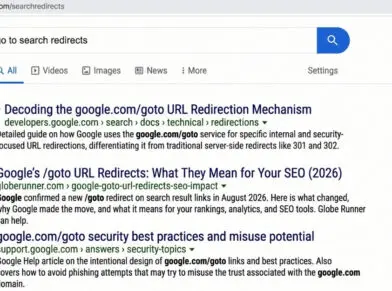
Meta descriptions are the short block of text that sits below a suggested website on the search engine results page (SERP) – see below. The space in which they appear is limited, and so are your characters.
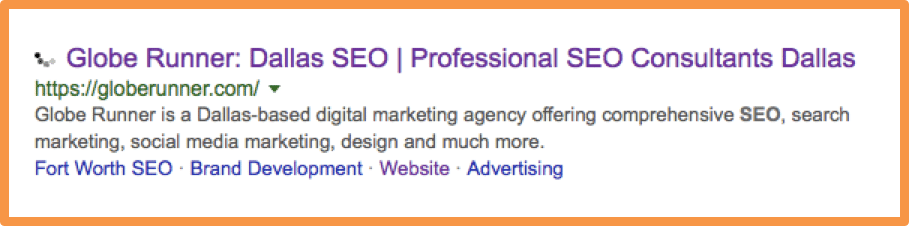
In late 2017 Google released an algorithm update that lengthened meta descriptions to 320 characters. Since then, there’s been some debate about length. Our recommendation? Pack in the most critical elements within about 160 characters. Otherwise, you risk all that compelling content being trunked (by the search engines that be).
How do Meta Descriptions Improve your Page Rank?
“Officially” you’ll reap no explicit ranking benefits from your meta descriptions. True, they aren’t directly built into the algorithm, but they still heavily impact your site’s click-through-rate (CTR). This, in turn, tells Google whether or not you’re a good match for specific search queries and subsequently where to order you on the SERP.
Writing Magical Meta Descriptions
Google Dallas SEO agency and you’ll get an onslaught of companies vying for your business. Before a customer ever has the chance to be swayed by your company’s prestigious awards, expert web design, or testimonials, the 2-3 sentences in your meta description will form the basis of their decision.
Meta descriptions are a fantastic way to your showcase services and collect clicks, so long as you:
- Write them like an elevator pitch. If you had just 15-seconds to make your sell, what would you say? Now’s the time to make sure your words are concentrated and direct, punchy and enticing. There’s no room for fluff. Every syllable counts.
- Create one for each page. Unique meta descriptions are a critical element of every page on your website. The more context and clarity you can provide up front, the more clicks you can solicit. Give each page the stage for a few brief seconds to capitalize on its full potential.
- Proofread then re-read. Give your meta copy the same level of care you would a billboard. Though the spacing may be small, the impact is substantial. Typos in your meta descriptions rob you of legitimacy and could very well cost you potential sales.
- Include a CTA. Whether you want them to learn more about your product, try it out risk-free, or redeem a discount code, the more action-oriented perks you give, the more clicks you’ll get.
- Make them keyword-focused. You aren’t turning up in searches by pure luck. Users are on the hunt for something specific. Make sure you target that special something with well-researched keywords. Not only does it make the search engines take notice, potential customers will, too.
Get meta with your meta descriptions and optimize them down to the smallest detail. Doing so could mean the difference between ranking on Google’s first page and being crowded out by a louder, more compelling online elevator pitch.
Want to increase your page ranking on Google SERPs? Let us give you a lift.
NATIONAL IT PROFESSIONALS DAY 2018
Hey end-user! Have you thanked your bit ’n’ bytes virtuoso lately? Your IT professional does not live on caffeine and trouble tickets alone!
If a note of praise or thank you is overdue, you are in luck. Tuesday, September 18, is National IT Professionals Day. It is the perfect opportunity to recognize and appreciate the work you know and the work you don’t that your information technology professional performs daily, weekends and nights too.
What IT Professionals Do for You
Let’s put this in perspective. Your IT guy or gal is the one who sets up your email and ensures you do not become a spam magnet; patches your organizations’ network vulnerabilities; and resets your password _ again _ because you forgot yours while sipping pina coladas in Cancun.
IT professionals are becoming ever more critical to the core functions of all businesses in all sectors, from Main Street to the multi-national that never sleeps. The Bureau of Labor Statistics predicts that the number of IT jobs will grow by about 500,000 positions in the next seven years.
The profession’s importance is growing leaps and bounds because IT is not just on your desk or in your ear. It is everywhere: In the workshop’s lathe, your car’s tires, in your Google Assistant. McDonald’s knows exactly how important the geeks in the server room are. Just watch this TV commercial, a quintessential favorite of IT pros.
How to Show Your Appreciation
If you take the step to celebrate the day, no matter how modestly, it is sure to surprise and delight your Rails-literate code wrangler. In fact, this year will be the just third annual national day recognizing IT professionals.
A card, a cupcake, or an impromptu office gathering to celebrate this highly skilled employee’s valor and patience in saving everyone from a motherboard meltdown will do. However, if you are an overachiever and know just what flavor of geekiness your IT professional subscribes to, swag that is off the chain is just a click away.
Most important of all will be a sincere “thank you.” The IT pro addresses error codes and smashing email delivered malware (despite repeated warnings), all while keeping the solid-state and clouded architecture, and the core applications working seamlessly.
Charles M. Schwab, an unquestionable financial guru said, “I consider my ability to arouse enthusiasm among men the greatest asset I possess. The way to develop the best that is in a man is by appreciation and encouragement.”
SHOULD YOU START A PODCAST FOR YOUR BUSINESS?
Once upon a time, it was all about campfires not TVs, social media, or even radio that held us captive. The stories told around the fire helped shape entire cultures and solidify communities.
As the oldest form of education, storytelling lives on in our consciousness and the ancient art continues to form indelible tenets of our modern world. It predates writing and still manages to stay distinct and relevant after all these centuries.
In their most recent chapter, stories have found a new home. Through podcasts, they can now venture to far away lands, go back in time, and project into the future. They can travel by invisible magic, radiating through headphones or car speakers.
Audiences hungrily devour them whole. With their insatiable appetite for information and good storytelling, podcasts are consumable content with the rare ability to practically hypnotize your target audience.
In a world of shrinking attention spans, there’s never been a better time for high-quality audio content. Looking for a new way to promote your business? These podcast tips will help your brand story take center stage.
Why your Business Should Start a Podcast
- Audiences will follow the sound of your voice. Reading is a silent activity – one that rarely, if ever, conveys your point with the inflection you wrote it. That’s because reading happens in our head, and the writer is often cast in our own voice. True, we’re big proponents of creating a discernible brand voice with your copy. But there’s something incredibly personal about speaking into someone’s ear. It captures their attention and hearts, beckoning them to trail your words like a crumb-lined path.
- It’s easy to digest and recall them. Podcasts can be consumed while tending to life’s myriad demands. They can co-pilot a drive to work, be someone’s sous chef in the kitchen, or take the place of a workout buddy. No need to stop, focus and devote swaths of time most of us don’t have. Information told in storytelling formats is also shown to aid memory and, done right, can increase CRO.
- Podcasts have multiple distribution channels. If you have a Mac, you know that iTunes search results often populate before you ever finish typing a query into Safari. Google Play, Sticher, iHeartRadio, and even Soundcloud are all examples of other podcast hosting platforms that are happy to help you get the word out. There are a number of other distribution strategies, including keyword and SEO optimization, which can promote your podcast organically.
- The market isn’t saturated with storytellers. At least not yet. Shows like Serial have only just recently really put podcasts on the map. We’re just starting to see the swell before the tsunami. Now’s the time to build your audience and get them hooked on your commendable content before the sea becomes so large it drowns out your brand voice.
- They won’t blow your marketing budget. All you need are a host and a mic to get started. For less than $75, you can find a piece of recording equipment and editing software to help broadcast your message to the masses. What’s more, a podcast can bring in enough leads and sales to quickly pay for itself.
For as long as there’s been language, there have been stories. Use podcasts to share tales with your target audience for a happily ever after.
This doesn’t have to be the end! If you need help casting yourself into the world of podcasts, we can help your journey.
FACEBOOK CRYPTO
Cryptocurrencies. Depending upon who you ask, they’re either the next big thing to take e-commerce by storm, or they’re just an overhyped fad that will crash much sooner than enthusiasts want to admit. Regardless of your feelings on the matter, learning about this new technology can be interesting, especially when you see how many different cryptocurrencies are currently available for purchase and the sheer volume of new currencies that are currently in development. Bitcoin is only the most famous example of cryptocurrency—it’s definitely not the only player in this market!
In today’s video, we’ll give a brief overview of cryptocurrencies; namely, how they “work” in regards to blockchain technology and enforced scarcity. The individual units of a cryptocurrency (be they Bitcoins, Litecoins, or Dogecoins, or something else entirely) don’t have any inherent value on their own—but can’t the same be said for the paper money and digital transactions that rule most consumers’ lives these days?
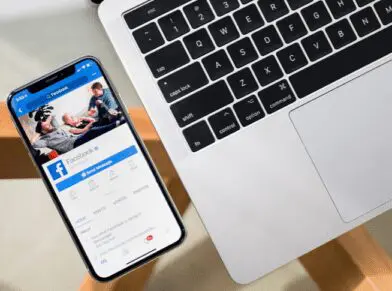
Facebook has recently been in talks to launch its own brand of cryptocurrency. Odds are, it will first be designed as an acceptable method of payment for making purchases on Facebook before it’s refined for off-site use—or even gains enough value to be traded for other forms of currency. On one hand, Facebook’s new system won’t carry the same weight as more established systems like Bitcoin. On the other hand, though, Facebook is a household name and a publicly traded company. Its reputation could propel its popularity with surprising speed.
We’re not saying that you should definitely rush out to buy up Facebook coins the moment they become available. We’re not saying that you should definitely ignore the company’s attempts to hop on the cryptocurrency bandwagon, either. Instead, we’re suggesting you keep an eye on this trend and join us in seeing where it goes!
WHAT YOU NEED TO KNOW ABOUT YOUR ‘ABOUT US’ PAGE
Let’s talk about you and…well, you. More specifically, let’s talk about you talking about you.
If that’s getting too meta, stay with us.
By now, you know that having a company website is non-negotiable. So, think of it this way; If your brand were a person, your site would be the clothes it wears. And the about us page, the subject of today’s chat, would be its shoes. The overall outfit would be incomplete and awkward without them, but not all pairs are a fit.
We’ll show you how to write the about us page of your website, complete the look, and step into the world looking irresistible, header to footer.
Why Everyone’s Talking about About Us Pages
Say you were interviewing for a position, which, in theory, is what your website is: a one-way interview with customers. You wouldn’t spend tons of time and effort carefully picking out your suit, ironing your button down, and meticulously combing your hair only to slap on a pair of flip-flops to complete the outfit. Same goes for the about us page of your website.
Just like sloppy footwear, sloppy copy on your about page can ruin your chances of getting the job.
Though the web design features can create a professional exterior, you still need the goods to back it up and finish your look. Visually appealing web graphics and a good layout won’t do you any good if you’re leading with a poorly written ‘about us’ page that was clearly an afterthought.
Writing your About Page
Be it a potential customer who is piqued by your social media presence, a local journalist who’s covering businesses in your area, or a potential new employee sizing up your company culture; it’s everyone’s go-to page. The place they can mine a wealth of information about who you are.
The important thing is to be ahead of them and in charge of the conversation.
Here are five suggestions to make it a productive one.
- Treat it like sales collateral, because it is. Of all the marketing copy you write, this one page is the most central to who you are. It’s also a breeding ground for answers to frequently asked questions that, once addressed, can encourage a connection with your brand. Remember that when a potential customer lands on your about page, they’re considered a captive audience. Or at least they will be the more intentional you are about your big reveal. May we recommend sending your core values to the front?
- Show your story – don’t just tell it. Unless you’re writing an open letter format, which certainly works for some businesses, a wall of words might not be the best tactic. Instead, try breaking up the text with emotion-packed marketing Or, better yet, introduce your company with a video. It’s personal. It’s proficient. And it’s the best way to pack a lot of information into just a few frames. In fact, according to McQuivey’s Forrester study, How Video Will Take Over the World, “Video is worth 1.8 million words.” Not sure what to write? Speak from the heart instead.
- Put a face to your name. There’s competition in every industry, but there’s only one you. As corny as that may sound, it’s your best, if only way to truly differentiate yourself. Let users see the human beings behind the brand and have your team share a little personality while they’re at it. Even if customers never meet you in person, you can be so personable that they’ll feel like they’ve known you all their lives. And as we’ve seen, the more personalized your website, the higher your CRO – plain and simple.
- Share what others are saying. From testimonials and prestigious awards to press clippings, the about page is a great opportunity to share your story through other people’s eyes without cluttering up your home page. It shows the impactful quality of your brand and is an integral part of your story – past and present.
- Call them to action. Let your about us page be a hub in the wheel of your website. CTAs can be plentiful and increase the traffic on other pages of your site. Take visitors by the hand and gently lead them to influential social media channels, your company blog, or careers page. You can even bate them to continue their journey by signing up for your email list.
Final words
A brands about us section is likely to be a high traffic page on your site. It’s usually also the first to be visited, but if not done well, it may also be the last.
Having writer’s block or finding it hard to brag on yourself? Let our content experts write an about page for you.
CONNECTING TO CUSTOMERS WITH USER-GENERATED CONTENT
What if we told you that you had a team of team of untapped marketers and salespeople waiting to help spread the word about your business? They don’t require a salary, and you might never meet them in person, but you also can’t afford to ignore them.
No, we’re not suggesting you “invest” in an unpaid intern. Instead, we recommend crowdsourcing content from willing brand ambassadors.
Need a refreshed marketing strategy to help you break through the noise and increase your organic reach? By connecting with your customers with user-generated content, you can.
User-Generated Content Defined
Anyone outside of your business who interacts with your brand on social media has the potential to supply you with click-worthy user-generated content (UGC). This type of collaboration turns followers into content producers. With it comes a steady supply of photos, videos, and unsolicited testimonials about your business.
Why is UGC Effective?
User-generated content satisfies two key pillars consumers base purchasing decisions on: trust and authenticity. Not only are they more likely to trust peer recommendations, according to Social Media Today, “60% of consumers said user-generated content (UGC) is the most authentic form of content – 3X more authentic than brand-created content.”
User-generated content also helps your business by:
- Giving your marketing department a break, allowing them to focus on other essential tasks outside of content creation.
- Expanding your organic reach, turning followers who evangelize your brand to their family and friends into mico-influencers.
- Building relationships with your online community, providing personal insights into your target market audiences.
How to Source User-Generated Content
Now you know what UGC is and why it’s essential, but where do you find it?
It’s probably not as simple as a Google search. However, your customers and their lives are most certainly online. It’s just a matter of zeroing in on the compelling content that furthers your brand.
Here are five ways to hone your hunt for quality user-generated content:
- Host a contest or give-a-way. Very often you get what you give(-a-way). Try incentivizing users to offer up their personal content in exchange for prizes or experiences that directly relate to your business. Putting out a call for photos or videos that have a specific theme will help you broadcast on-brand messages. Pro tip: specify that the photo with the most likes will win, and you can all but guarantee good engagement when you re-post it.
- Cruise your geo-tags. Periodically check to see who’s been tagging themselves at your place of business. If you see something you like, use an app like Repost to re-share with your followers. Be sure to tag them in the post, so the original is credited appropriately.
- Brand your hashtags. You’re well within your rights to search out general hashtags as they relate to your brand; however, creating hashtags that are specific to the work you do will instantly catalog and categorize potential submissions. Airbnb had of the most popular campaigns of 2017 using this social media strategy. While the #WeAccept branded hashtag reinforced them as a global brand, the UGC they posted was wholly representative of their mission of non-discrimination. (A value-based marketing win that we can definitely get behind.)
- Call for submissions. You can use your existing social media presence to simply request customers tag you in their photos and stories, but if you want to take it a step further, request photos:
- in your newsletters – have a specific section with hashtags to use and other instructions to ensure you can find the photo.
- on your homepage – create a banner directing them on where and how to submit.
- with signs onsite – put up an irresistible background or photo booth that will make folks naturally want to gravitate and re-share.
- Don’t forget about the employees. We recommend letting customers peer behind the curtain once in a while. The backstage look has an inherent core of authenticity. And what better way to personalize your brand than to share a bit about the people who make it run? Even if you remain strangers IRL, having employees share your company content and supply you with personal posts of their own will help users feel more connected.
In the end, there’s no wrong way, or place, to share user-generated content. Be it on your website, in your email marketing, or posted to your social media accounts, the message is clear: polished and perfect is out. ‘Real’ is the real deal.
BURGER KING INSTA STORIES
Online ordering is the way of the future. Whether it’s through apps or desktop websites, more and more eateries are now offering consumers ways to assemble a meal, pay for it online, and either have it delivered to their door or be ready for pickup at a store within the hour. Not all eateries offer this kind of service, of course; many still require customers to either call in their orders or simply drop by in-person. But restaurants that DON’T allow people to obtain food with a few keystrokes or screen taps definitely run the risk of being left behind. How comfortable are you with online ordering? Does your company offer it for the goods and services that it provides?
In this video, we discuss a special promotion that was run jointly by Burger King and Instagram in Spain. Spanish burger-lovers were able to use polls on their Instagram Stories to customize their perfect Whopper, adding and subtracting ingredients as they saw fit. But this wasn’t just an exercise in opinion gathering. After sharing their ideas for their ideal sandwich, customers could then go to their local restaurant and enjoy their one-of-a-kind Whopper…for free! By the end of the event, Burger King had given away over 30,000 hamburgers, and they’d engaged with even long-time customers in a way that was fun and revolutionary.
Small businesses eager to get on track with online ordering systems would be wise to keep an eye on Instagram. This social media giant has already experimented with an in-app payment system, meaning that it could one day be a viable platform for virtual shopping. Folks who adore Instagram will likely welcome this additional use for the application…and people who just like the speed and convenience of e-commerce will be happy for the opportunity to expand their horizons.
RETENTION MARKETING 101: HOW CURRENT CUSTOMERS HELP YOU SELL MORE
Without customers, your brand isn’t worth much. Most large and small business owners have been conditioned to focus almost solely on acquiring more and more customers. And sure, there’s a time and place for that. But what good is a growing customer base if you’re losing the ones you already have?
The literal and figurative cost of acquiring new customers is steep – not unlike customer acquisition marketing itself. According to Marketing Profs, taking a new customer through the sales cycle will cost you more than five times what it typically takes to make a second sale to an existing customer.
Looking to expand your profit margins in 2018? Time to deepen and nurture your current relationships. Here’s how customer retention marketing strategies can help.
Sell More, Do Less
Five happy customers who each sing your praises to one friend are worth 100 potential clients waffling in your pipeline. In this way, retention marketing helps to reframe your approach with current customers. Done right, and you’ll turn them into free marketing and sales help.
Your current customers are also likely to be more responsive to your cross-promotional marketing efforts. When they know the quality of your goods and service, they’re less likely to hesitate in the face of an upsell or price increase.
Keep your name (and excellent service) in the brain’s current customers, and you might just insulate yourself from customer attrition due to competition, too.
Retention Marketing Basics
There’s only one way to get where you want to go: start where you are.
We recommend you begin with your brand voice. The more your internal goals and external communications align, the more likely customers are to actually listen. Make them clear, make them consistent, and just like your customers, make them current. Bonus points if you have a customer support lead weigh in on crucial marketing copy. They can help you make sure your messaging is airtight.
While you’re at it, why not give your most loyal customers the floor? Whether by testimonial or social media review, make sure you’re amplifying the voices of those you’ve impressed along the way. Keep your ear to the ground for truly compelling stories, and don’t stop shy of handing them the mic. (Literally, invite them to speak at your next hosted event or a conference you’re attending.)
Of course, there are still two groups aside from your happy customers that can’t be overlooked: the unhappy ones and the competition. Lose sight of the former, and you miss a valuable opportunity to learn how to improve your processes. Ignore the latter, and you’re out a chance to plug a potential customer leak.
The more you prioritize current customers in your content marketing and social media strategies, the more you’ll recognize ways to engage, stay in touch, and reach out with new opportunities.
Ultimately, stands to reason the more time and attention you pour into your current customer base, the fuller your sales – and leaner your marketing budget – will be.
Need help crafting an out-of-this-world marketing strategy? Get us on retainer.
GLOBE RUNNER RANKS ON THE 2018 INC. 5000
Top 10 Fastest Growing Marketing and Ad Agencies in the Dallas-Fort Worth Metro
Dallas, TX August 16, 2018 – Inc. magazine today ranked Globe Runner 4203 on its 37th annual Inc. 5000, the most prestigious ranking of the nation’s fastest-growing, privately-owned companies.
Globe Runner achieved a three-year sales growth of 81%. The Addison based company joins a select number of digital marketing agencies recognized in this year’s list.
The Inc5000 represents independent small to mid-sized businesses with revenue and employee growth year after year. Notable companies in the Dallas Metroplex include Poo-Pouri, Studio Movie Grill, and Nothing Bundt Cakes.
“When I started Globe Runner in 2009, our mission was to help companies grow digitally,” said Globe Runner CEO Eric McGehearty. “We are growing today by continuing our mission of full-service digital, delivering results to clients.”
In January 2017, Globe Runner acquired Black Lab Creative allowing the internet marketing company to offer in-house design, creative, and printing solutions.
Recently, 2018 delivered two Addy awards (Bronze and Silver) to Globe Runner by the American Advertising Federation.
More about Inc. and the Inc. 5000
The 2018 Inc. 5000 is ranked according to percentage revenue growth when comparing 2014 to 2017. To qualify for the list, companies must have been founded and began generating revenue by March 31, 2014. They had to be based in the US, privately held, for profit, and independent—not subsidiaries or divisions of other companies—as of December 31, 2017. (Since then, a number of companies on the list have gone public or been acquired.) The minimum revenue required for 2014 is $100,000; the minimum for 2016 is $2 million.
As always, Inc. reserves the right to decline applicants for subjective reasons. Companies on the Inc. 500 are featured in Inc.’s September issue. They represent the top tier of the Inc. 5000, which can be found on www.inc.com/inc5000.
About Inc. Media:
Founded in 1979 and acquired in 2005 by Mansueto Ventures, Inc. is the only major brand dedicated exclusively to owners and managers of growing private companies, with the aim to deliver real solutions for today’s innovative company builders. Winner of the National Magazine Award for General Excellence in both 2014 and 2012. Total monthly audience reach for the brand has grown significantly from 2,000,000 in 2010 to over 18,000,000 today. For more information, visit www.inc.com.
The Inc. 5000 is a list of the fastest-growing private companies in the nation. Started in 1982, this prestigious list of the nation’s most successful private companies has become the hallmark of entrepreneurial success. The Inc. 5000 Conference & Awards Ceremony is an annual event that celebrates their remarkable achievements. The event also offers informative workshops, celebrated keynote speakers, and evening functions.
- « Previous Page
- 1
- …
- 10
- 11
- 12
- 13
- 14
- …
- 44
- Next Page »